


WHO warns on supply disruption
up shipment of protective
equipment; cases top 3m
The World Health Organization (WHO) yesterday appealed for more flight capacity to step up shipments of diagnostic tests and protective equipment to areas where Covid-19 is spreading, especially Latin America.

Paul Molinaro, chief of WHO operations support and logistics, said global vaccine shipments were disrupted in April and if this continued into May there would be gaps in routine immunisations and campaigns against other disease outbreaks.
The UN's World Food Programme has reported the first disruptions in some food supply chains that "could bite deep", he said.
"We saw the international air transport system on which we are quite dependent for movement of cargo gradually shut down. So we are at the point now where we need to look for solutions to this," Molinaro told a UN virtual news briefing in Geneva.
The United Arab Emirates has provided planes to collect supplies in China, which are then distributed via a Dubai hub, he said, adding that other states had made air assets available.
"On commercial aircraft, we are always willing to take more offers. We appeal constantly for more offers of assets, or extremely discounted air cargo," Molinaro said.
Demand has skyrocketed during the coronavirus crisis but the Geneva-based WHO has managed to acquire and distribute 1.1 million diagnostic tests, with a further 1.5 million on the way, he said. The WHO had benefited from some preferential pricing and aimed to secure 9 million tests through consortia.
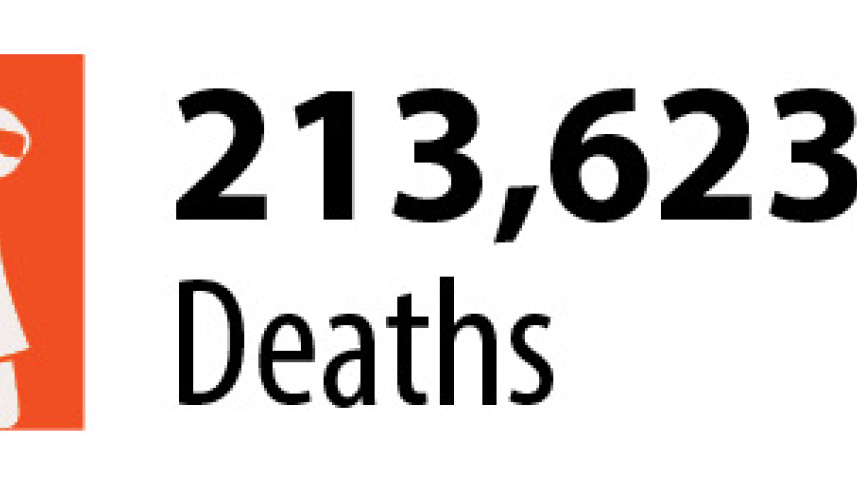
Some 3.03 million people have been reported to be infected by the novel coronavirus pandemic globally and 211,326 have died, according to the latest Reuters tally.
Panama will serve as a hub for regional distribution of personal protective equipment and other supplies in Latin America, after delays due to distance and other issues, he said.
"We are aware that (there were) difficulties of supplying Latin America in the beginning, and at the time the caseload wasn't high and we were concentrating on other areas," Molinaro said.
"Certainly the situation has changed and we are in the process of now planning that the next acquisitions and batch volumes we get at least in PPE (personal protective equipment) will be making their way in that direction, and within the plan for tests there will be allocation there also."
LOCKDOWN EXIT
Countries are beginning to chart their path out of shutdowns imposed to stem the spread of the deadly disease.
Prime Minister Edouard Philippe told parliament yesterday that France will not end its nationwide lockdown unless the number of new cases of infection drops below 3,000 per day.
"The lockdown being lifted on May 11 depends on new cases dropping below 3,000 a day ... If the indicators are bad, the lockdown will not be lifted on May 11," Philippe said.
Spain were poised yesterday to announce plans to ease strict lockdowns that have been in place for weeks.
From next week, Italians will be able to exercise outdoors and visit relatives -- but only if they wear masks and refrain from hugs and handshakes.
The three countries are the worst affected in Europe, reporting well over 20,000 coronavirus deaths each.
In Germany, which allowed some shops to reopen last week, experts warned against a rush to lift lockdown measures after new data showed a slight uptick in infection rates.
 For all latest news, follow The Daily Star's Google News channel.
 RECESSION FEARS
With the world's economic outlook looking bleak, calls are mounting in some quarters for governments to ease curbs to avoid a disaster in the hardest-hit sectors.
Forecasts warn of the worst global recession in a century, with oil prices tumbling and the travel and tourism sector badly hammered.
In the US, Trump again took aim at China's handling of the crisis.
"We are not happy with China... we believe it could have been stopped at the source. It could have been stopped quickly and it wouldn't have spread all over the world," he said.
China's foreign ministry was unequivocal in its response. Spokesman Geng Shuang accused US politicians of having "only one objective: shirk their responsibility for their own poor epidemic prevention and control measures, and divert public attention".
HUMAN CONTACT
Some US states have moved to lift restrictions despite warnings from health experts -- but to the delight of some citizens.
"We need human touch, human contact," said 64-year-old Kim Kaseta, as she tucked into breakfast at a Waffle House restaurant in the US state of Georgia.
Most states do not yet have sufficient Covid-19 testing to consider relaxing stay-at-home orders, according to an analysis by Harvard researchers and the health news site Stat.
Trump said on Monday that testing was being rapidly expanded and that he expected to see a "lot" of schools open up, even if there is little time left in the school year.
Despite other European countries moving towards reopening schools and shops, British Prime Minister Boris Johnson said it was too early for the UK to follow suit.
Johnson, who returned to work Monday after his own battle with the virus, said he could not "throw away all the effort and the sacrifice of the British people and to risk a second major outbreak".
His comments stood in contrast to those made by New Zealand's Prime Minister Jacinda Arden, who said the nation had won the battle against "widespread, undetected community transmission".
New Zealanders indulged in fast food and coffee shop treats for the first time in five weeks yesterday as the country lifted its strict lockdown.
"We see the difference in other countries and I don't envy them, that's for sure," said Wellington resident Cheryl Robertson, who planned to celebrate her newfound freedom with a curry.
In Australia, hundreds of surfers and swimmers rushed back to the waves at Bondi Beach in Sydney, five weeks after police closed the area because of large crowds flouting social distancing rules.
"I've been excited for like a week, I was like: 7:30 right here," Diane Delaurens told AFP, dripping after his early-morning surf session.
No one knows when the virus crisis will end as scientists race to develop treatments and, eventually, a vaccine.
Comments