


Air pollution raises risks, vulnerability
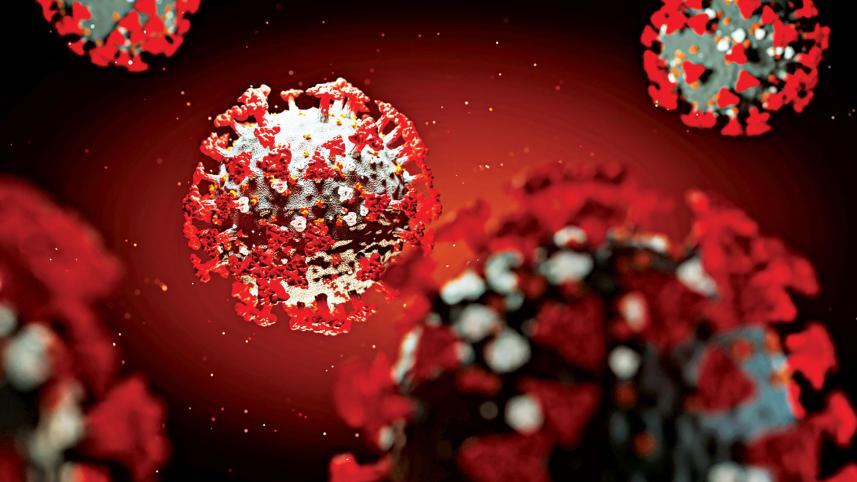
Bangladesh extremely vulnerable to COVID-19 as thousands of Bangladeshis are already suffering from chronic diseases because of their past exposure to air pollution, according to the study conducted by Centre for Research on Energy and Clean Air (CREA).
"Past air pollution exposure has made people much more vulnerable to COVID-19 and is now contributing to the death toll and the enormous pressure on healthcare systems from the disease", said Lauri Myllyvirta, the lead analyst of CREA citing multiple studies,

The research, titled 'Air Quality, Health and toxic impacts of the proposed coal power cluster in Payra, Bangladesh' released in a virtual press conference yesterday jointly organized by CREA – an independent research organization focused on revealing the trends, causes, health impacts, and the solutions to air pollution, and Bangladesh Poribesh Andolon -BAPA (Bangladesh Environment Movement), a Bangladeshi civil society platform.
The study has found that the air pollution will worsen if Bangladesh continues with its plan to build Payra power hub, a cluster of eight large power plants with a total capacity of 9.8GW and combined with very lax emission standards.
In Bangladesh, air pollution is responsible for about 11 percent of the disease burden from diabetes, 16 percent of lung cancer, 15 percent of chronic obstructive pulmonary disease, 10 percent of deaths from ischemic heart disease and 6 percent from stroke, according to data available from Global Burden of Disease Study 2017.
"The potential emission scenario should have discussed at the planning stage of setting up any such plants in Payra. We should publish more reports like this for the greater interest of the nation", said Rasheda K Choudhury, chair of the press conference, and former adviser to the caretaker government.
She urged the government to abandon all coal projects in Payra for ensuring the food security of the nation under COVID-19 outbreak.
The analysis shows that the air pollutant emissions from the Payra plants would be responsible for as high as 34,000 air pollution-related deaths over an operating life of 30 years.
Of which 4,900 due to chronic obstructive pulmonary disease, 11,000 to ischemic heart disease, 2,700 due to lower respiratory infections of which 300 in children, 1,800 due to lung cancer and 8,900 due to stroke. 2,400 deaths are due todeaths related to NO2 exposure.
"We can well assume from the research that the COVID-19 pandemic would be worsened in Bangladesh due to high level of air pollution as well such epidemic in future", said Dr. Mohd. Abdul Matin, executive vice president of BAPA.
Bangladesh is among the countries most affected by air pollution, with the life expectancy in the country reduced by almost 2 years due to the impacts of pollution exposure on health.
Dhaka was ranked as the second most polluted capital city in the world, after New Delhi, with average PM2.5 pollution levels more than 8 times as high as the World Health Organization guideline and 6 times the country's national standards.
The plants would also emit an estimated 600-800 kilograms of Mercury per year into the air, of which one third would be deposited into land and freshwater ecosystems in Bangladesh, according to the study.
Most of the deposition will take place onto cropland and into waterways, increasing the mercury concentrations in food. The levels of mercury deposition are potentially dangerous in an area with as many as 1.5 million inhabitants.
There are five important Hilsa fish sanctuaries including Hilsa spawning grounds, migration routes and egg and fry areas in the vicinity of Payra hub that will be impacted by direct mercury deposition.
"The most troubling aspect of the mercury emissions from the Payra hub is that they are so high they virtually guarantee that Hilsa may become too toxic to eat or sell", said Dr. Md. Anisur Rahman, the Chief Scientific Officer of Bangladesh Fisheries Research Institute (BFRI) and eminent Hilsa Researcher, in the press conference. "Even, mercury deposition rates as low as 125mg/ha/year are known to accumulate unsafe levels of mercury in fish".
Dr. Md. Manzoorul Kibria, Professor of the University of Chittagong, and Coordinator of Halda River Research Laboratory added that the projected emission could disrupt Hilsa fish breeding at five river sanctuaries near Payra.
Hilsa is the highest valued fish in Bangladesh commonly used by a large population for food, income and employment. It is the national fish of Bangladesh and has an annual value of USD 2 billion.
BAPA secretary general Sharif Jamil moderated the event.
End
 For all latest news, follow The Daily Star's Google News channel.
Comments