


RUNAWAY TECH

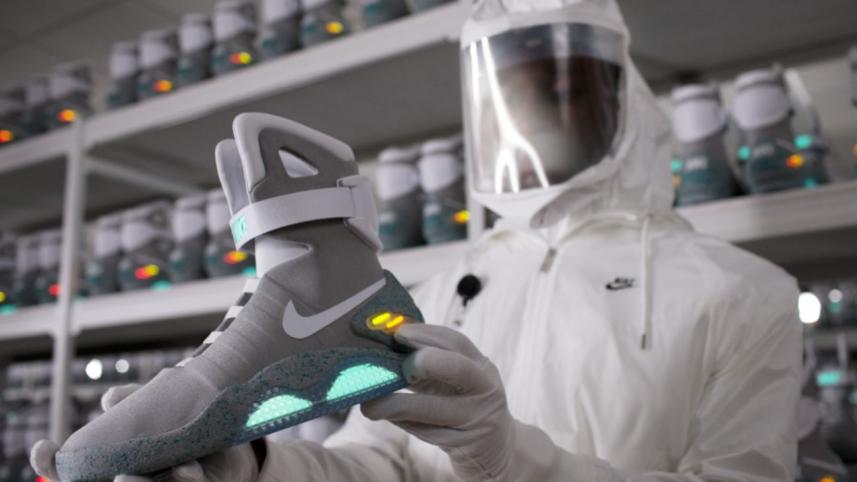
Back to the Future may officially be in the past now, but the iconic film series promised us quite a few incredible things for this year. While we have made little progress on the hoverboard and almost none on the self-drying, self-fitting jacket, at least the self-tying Nike sneakers are a reality! Just a few days back, Nike invited Michael J Fox, aka Marty McFly for trying on its special 'Back to Future self tying edition' sneakers and it was a glorious moment for show technology indeed.
Although the first recorded history of shoes dates back to 8000 BC and the precursor to the modern running shoes from J W Foster and Sons first hit the market in the late 19th century, serious research into running shoe technology did not begin until the early 20th century.
 For all latest news, follow The Daily Star's Google News channel.
 During the beginning of 1900s, running shoes made by Adolf Dassler, a German shoemaker, became hugely popular. Hand crafted and highly customized, these shoes were the first to feature spikes and designed for specific running distances. These shoes became hugely popular and Dassler is often even credited as being the 'Father of modern running shoes.'
Fun fact: Dassler's company, Addas, went on to become modern day Adidas!
This popularity of running shoes was further strengthened in the 1950s when British runner Roger Bannister ran an entire mile under four minutes and there was no looking back for the 'running shoe industry.'
Since then, running shoe technology has progressed by leaps and bounds. We now have a plethora of brands- Nike, Puma, Adidas, Reebok, Vibram, Asics and the list goes on and on. And all these companies spend extensive amounts of money and labour into developing shoes that they claim will give users an extra edge. While all these brands use a complex blend of scientific terms and marketing jargon to explain how their innovations will revolutionize running as we know it, there are two simple objectives that these try to achieve:
First and foremost comes running faster. The brands research into how they can make you run faster and more efficiently by working with your biomechanics to improve your running style. This pretty much boils down to getting maximum energy return from each foot strike, putting more power into your stride while encouraging better form and reducing energy loss from ground impact.
The second objective is to minimize injury. Running is a strenuous exercise, and runners tend to be quite injury prone. Thus, these shoemakers devise clever ways to cushion the feet such that shock from the blows from hitting the surface- whether a track, open ground or even the road, are minimized. They also come up with novel ways so that your feet have support while running.
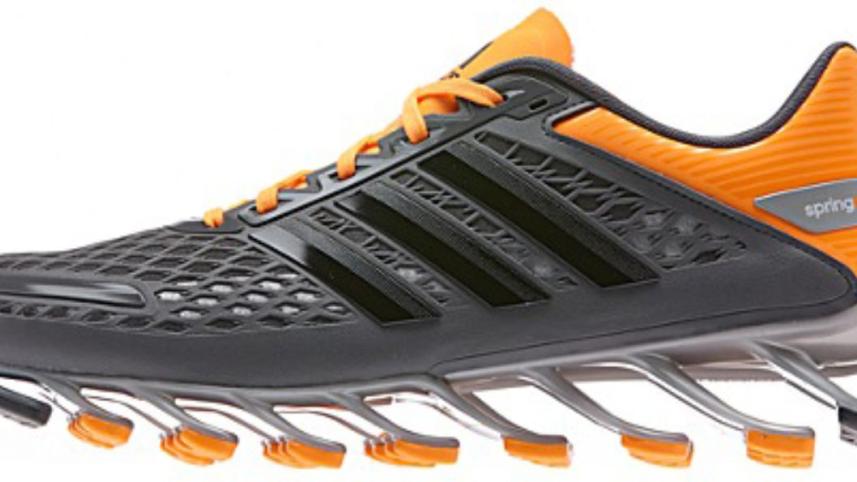
This is why we hear terms like Impact Guidance System, GEL cushioning system, Speva Midsole, DuoMax and Space Trusstic technologies- and all these from just one company (Asics)! Adidas, similarly, boasts term such as Springblade and Boost- terms which feel more at place as special abilities of video game characters than in the shoe you are wearing.
In this race to innovating, some companies even push the boundaries of common sense. Vibram, for instance, came up with the controversial 'Vibram five fingers', which, rather unlike a typical shoe, had separate chambers for each individual toe, making it look rather like a gloves… for feet!
Now, the question is- do all these matter? The laymen have no idea what GEL cushioning or Springblade means, and it is doubtful if the shoe salesmen have any clue either. Do all these actually help us run faster, or reduce chance of injuries?
In words of Mark Gallagher, eminent sports podiatrist, "Running shoes can minimise injury risk factors, but you can put the theoretically best running shoe on a runner who is poorly conditioned and it will make no difference whatsoever."
There are others who'd go as far as to claim that these modern shoes chock full of fancy innovations are the problem themselves! And there's quite a lot of evidence, albeit anecdotal, to corroborate that fact.
Having said all that, it must also be said that when you have a kickass pair of trainers that look brilliant on you, does it really matter if it doesn't do jack in terms of foot protection?
Comments