


Netanyahu defends strikes on Iran as response to 'existential threats'
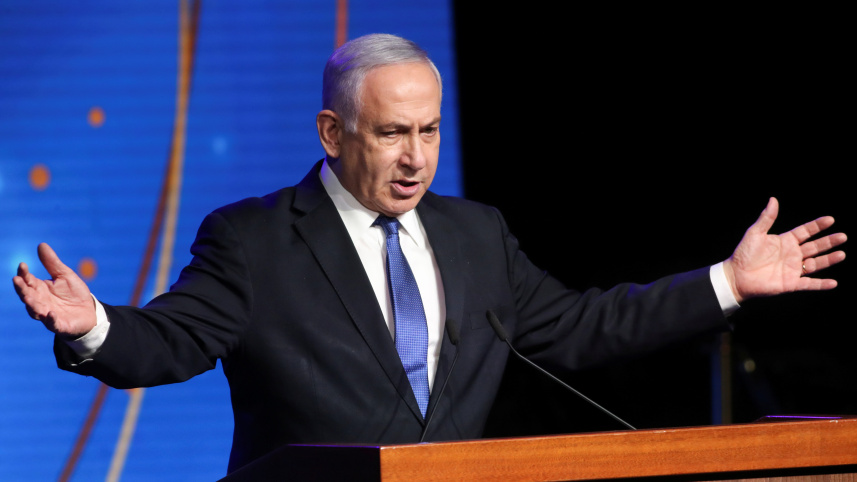
Prime Minister Benjamin Netanyahu of Israel said that the large-scale attacks on Iran launched early Friday are crucial to neutralise what he called not one, but two "existential" threats to the country, according to New York Times report.
Alongside Iran's long-feared nuclear programme, Netanyahu pointed to a newer danger: Iran's ballistic missiles -- over 200 of which were fired at Israel in waves of retaliatory strikes over the weekend.

While Israel has responded with advanced missile strikes of its own -- including those that set oil facilities in Tehran on fire -- it remains concerned about Iran's ability to launch a powerful counterattack.
In a video message Friday night, Netanyahu claimed Iran had ramped up production, aiming to build 300 ballistic missiles a month -- potentially 20,000 in six years. He described each missile as "a bus-full of explosives" ready to hit Israeli cities.
How many missiles has Iran fired, and how many hit Israel?
Iran has fired roughly 200 missiles at Israel since Friday night, along with many explosive drones, according to Israeli officials.
The Israeli military has not disclosed how many were intercepted or how many penetrated the country's air defenses, citing security reasons. However, the prime minister's office said by Saturday afternoon that 17 impact sites had been identified, including hits in Tel Aviv and nearby suburbs Ramat Gan and Rishon LeZion. A later barrage targeted Haifa and its surrounding areas.
Strikes on Friday and Saturday killed at least seven Israeli civilians and wounded over 200 others, including seven soldiers, authorities said.
Brig Gen Effie Defrin, Israel's top military spokesperson, said Saturday that the country's air defense systems are "among the best in the world" but acknowledged they are "not hermetic."
 For all latest news, follow The Daily Star's Google News channel.
Comments