


World on brink of trade war
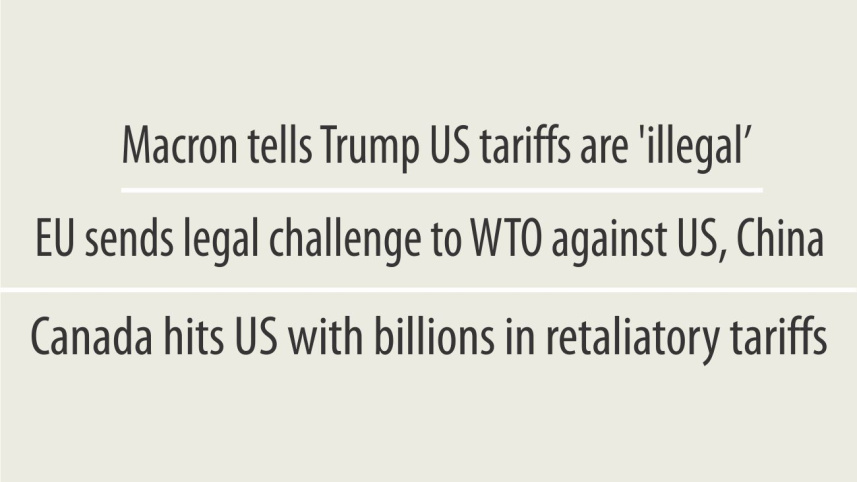
The world's largest economies stood on the brink of all-out trade war as the EU, Canada and Mexico drew up retaliatory measures to Washington's stinging steel and aluminium tariffs that came into effect yesterday.
Washington angered its major allies by slapping duties of 25 percent and 10 percent on imports of aluminium and steel.

The EU said it would challenge the move at the World Trade Organization.
The measures had actually been decided back in March, but at the time US President Donald Trump gave Canada and the EU -- the biggest sources of foreign aluminum and steel respectively for the US -- a grace period until May 31.
On Thursday, however, Trump announced that those exemptions were not being extended, and his decision immediately drew furious responses from Canadian President Justin Trudeau, German Chancellor Angela Merkel and French President Emmanuel Macron.
"These tariffs are an affront to the long standing security partnership between Canada and the United States," said Trudeau, as Ottawa hit back with retaliatory duties on US imports worth up to Can$16.6 billion (US$12.8 billion).
EU chief Jean-Claude Juncker said the 28-nation bloc "will announce in the next coming hours counter-balancing measures" in response to the US action.
Brussels has previously threatened to slap tariffs on US products including bourbon, motorcycles and blue jeans.
While Europe's freign policy chief Federica Mogherini insisted that the EU was "not at war with anyone", the bloc's trade commissioner Cecilia Malmstrom said Brussels would challenge the tariffs at the WTO.
"If players in the world don't stick to the rule book, the system might collapse. That is why we are challenging the US and China at the WTO," Malmstrom told a news briefing in Brussels.
Washington's move left European leaders fuming.
French President Macron told Trump in a telephone call that the tariffs were "illegal" and said Europe would respond in a "firm and proportionate manner".
And speaking to reporters, Macron described the US move as "a mistake in many ways because it responds to existing international imbalances in the worst way -- by breaking up and creating economic nationalism.
"And nationalism is war. That's exactly what happened in the 30s," Macron said.
In Berlin, Chancellor Merkel said the measure "risks touching off spirals of escalation that in the end hurt everyone".
Mexico, too, said it would impose retaliatory duties on a variety of US goods, including steel and a host of agricultural goods, including pork, apples and various cheeses.
 For all latest news, follow The Daily Star's Google News channel.
Comments