


Struggling UK PM May faces confidence vote
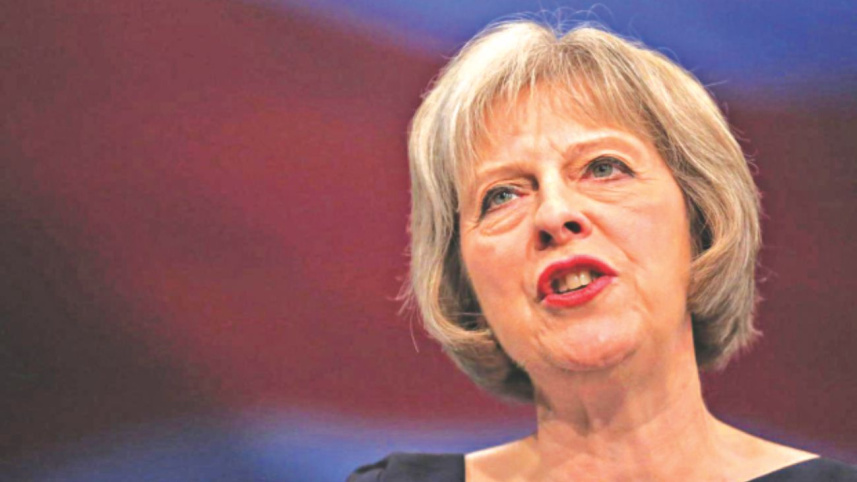
British Prime Minister Theresa May's government moved to fend off a threatened parliamentary rebellion over abortion yesterday ahead of a vote of confidence, laying bare its weakness following a disastrous election.
The House of Commons will vote later on May's legislative programme -- the Queen's Speech -- in a crucial test of whether her Conservative government can survive after losing its parliamentary majority on June 8.

The legislative agenda should pass after May formed a deal with Northern Ireland's Democratic Unionist Party (DUP), whose 10 MPs will vote with the 317 Conservatives on key issues in the 650-seat chamber.
But the government's jitters were made clear when it announced it would change abortion rights for Northern Irish women ahead of a threatened revolt by MPs.
May's personal authority is deeply damaged after calling the election three years early, expecting to win a landslide only to find herself hanging on by a thread.
She cut short a trip to Berlin yesterday with European allies ahead of next week's G20 summit, to ensure she was present for Thursday's vote.
The majority of the bills in the Queen's Speech concern Britain's departure from the European Union, on which the first formal negotiations took place last week.
May's Brexit plan is under scrutiny as many saw the election as a rebuke to her move to pull Britain out of Europe's single market -- its largest trading market -- to prioritise cutting EU immigration.
Labour, which won 262 seats in the election, officially accepts that Britain will be leaving the single market but wants "full tariff-free access" to protect jobs.
However, some Labour MP have tabled an amendment to the Queen's Speech on Thursday calling for the government to consider staying in the single market.
Labour leader Jeremy Corbyn has ordered lawmakers to abstain, raising the prospect of his own rebellion.
May announced a deal with the DUP on Monday where they agreed to back her minority government in confidence and budget votes, in return for an extra £1.0 billion (1.1 billion euros, $1.3 billion) in state aid for Northern Ireland.
Many commentators question how long the alliance will last, while May's future is widely discussed in terms of when, not if, she will stand down.
 For all latest news, follow The Daily Star's Google News channel.
Comments