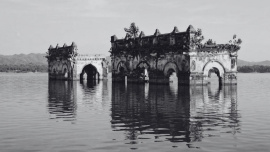
Those who attempted to assassinate Jinnah and called him “Kafir-e-Azam”

In the wake of Bangladesh’s mass uprising of 2024, the partition of India in 1947 has re-emerged as a subject of renewed political and historical interest. A range of narratives has surfaced that seeks to frame the 2024 uprising not in continuity with the popular movements of 1971 or 1990, but instead by drawing parallels with the political moment of 1947. Some of these voices go further, presenting the events of 1947 and 2024 as part of a shared historical trajectory and claiming joint authorship of both moments.
Against this backdrop, the noted researcher Altaf Parvez turns to the past to interrogate how Islamist parties positioned themselves during the creation of Pakistan in 1947. He has already written about the three-way debate among M. A. Jinnah, Maulana Maududi, and Maulana Madani. However, during the period of Partition, Jinnah and the Muslim League also had adversarial relations with many other Muslim-majority political groups and religious scholars. Today’s fourth instalment of this series discusses those conflicts.
(Read part 1, part 2 and part 3)
Before 1947, during the Pakistan Movement, numerous parties claiming Islamic political representation existed across undivided India. Among them, two significant currents were the Khaksar Movement and the Majlis-e-Ahrar. Jinnah and the Muslim League faced some of the fiercest attacks from these two groups. According to League sources, members of the Khaksar movement attempted to assassinate Jinnah on two occasions.
Part 1 - Jinnah vs Madani: The forgotten Muslim debate over Pakistan
Part 2 - Jinnah vs Maududi: The forgotten Muslim debate over Pakistan
Part 3 - Madani vs Maududi: The forgotten Muslim debate over Pakistan
Part 5 - Jinnah vs Fazlul Huq: The forgotten debate over Pakistan
The Khaksar movement was led by Maulana Mashriqi (1888–1963), also known as Allama Mashriqi. Linguistically, the term Khaksar means “those who are as humble as dust,” yet organisationally the Khaksars resembled a semi-military force. Wearing khaki uniforms and carrying shovels as their organisational symbol, they marched in the streets, often displaying a confrontational posture and sometimes staging mock military drills.
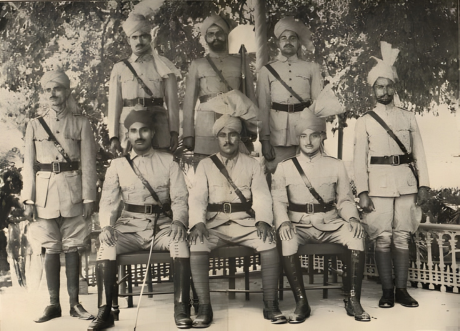
The Khaksars were not the first or the only organisation structured in a paramilitary style. Activists of the Rashtriya Swayamsevak Sangh (RSS), followers of Savarkar, also practised similar organisational methods. Later, the Muslim League established a comparable auxiliary organisation known as the National Guard, while the Sikhs had their own semi-military formation called the Akal Fauj.
Like the Majlis-e-Ahrar, the primary organisational base of the Khaksars was in Punjab. In 1925, Mashriqi presented his ideological vision through a work titled Al-Tazkirah. Soon after publishing it, he travelled to Germany, where he met Nazi leaders, an episode that provoked considerable British displeasure.
The Khaksars adopted an uncompromising and militant stance against both central and provincial authorities in India. As a result, they became victims of severe repression during the Muslim League’s Lahore session in 1940. On that day, so many Khaksar activists were killed in police brutality that the incident came to be known as the “Khaksar Karbala.”
The incident occurred approximately half a kilometre from the League’s conference venue at Minto Park. At that time, the provincial government in Punjab was led by Sikandar Hayat Khan, leader of the Unionist Party.
Following the violence of 1940, the Khaksars were banned for a period, and it appeared that the League offered tacit support for the ban. Considerable evidence suggests Jinnah’s unfavourable attitude toward Mashriqi and his alignment with British officials on this matter.
The League regarded the Khaksars as a dangerous rival. Sikandar Hayat Khan, the League’s ally in Punjab, also maintained a harsh stance toward them, as became evident in the events of March 19, 1940. Mashriqi’s son, Ehsanullah Khan, later died from injuries sustained in that incident. The banning of the Khaksars benefited Jinnah in two ways: the Khaksars were his political rivals, and the ban also diminished the popularity of Sikandar Hayat Khan, the League’s principal competitor in Punjab.
Rivalry between Britain and Germany also contributed to British sensitivity regarding the Khaksars. Jinnah clearly understood the British position on the matter and was unwilling to tolerate any rival to the League within Muslim politics. He often described the Khaksars as “ideologically blind.”
Amid these tensions, on July 26, 1943, a Khaksar activist attacked Jinnah with a knife at his residence in Bombay. The attacker was identified as Rafiq Sabir, and Jinnah sustained minor injuries in two places as a result of the assault.
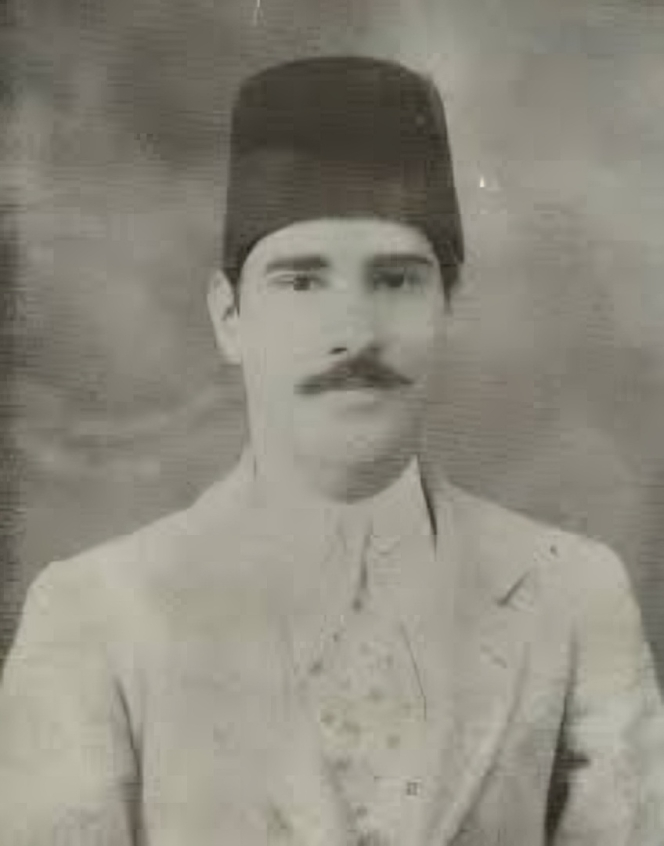
A legal case followed the incident. Since there were no independent eyewitnesses outside League circles, some doubts arose regarding the allegations made by the Jinnah family. The Khaksar organisation also claimed in court that the assailant was not one of its members.
On July 26, 1943, Maulana Mashriqi issued a press statement asserting that both the brutal repression of March 19, 1940 and the alleged Khaksar attack on Jinnah on July 26, 1943 were conspiracies—one orchestrated by the government and the other involving Jinnah himself.
The most significant public confrontation between the Khaksars and the Muslim League occurred in Delhi shortly before Partition, on June 9, 1947, during a meeting of the League’s Executive Committee at the Imperial Hotel. It was at this meeting that the League approved the Mountbatten Plan, which proposed the division of India into two separate states on the basis of religion. The Khaksars attempted to disrupt the meeting, arriving with improvised local weapons in an effort to prevent the League from adopting such a decision. They were particularly dissatisfied with the manner in which Punjab and Bengal were being partitioned.
During the protest at the Imperial Hotel, League activists (the National Guard) and the police jointly used force to remove the Khaksars from the premises. Since the League had prior knowledge of the possible attack, a substantial number of National Guard members had already been deployed. Jinnah himself was observed remaining calm during the clashes. Nevertheless, the League later portrayed the incident as the Khaksars’ “second assassination attempt” against him.
In addition to their clashes with the League, the Khaksars also came into conflict with organisers from the Deobandi, Barelvi, and Ahl-e-Hadith traditions. To counter the Khaksars, the organisation Ansar-ul-Muslimeen was first formed in Punjab by the Ahrar. Later, this group was incorporated into a broader organisation called the Fauj-e-Muhammadi, which included Deobandi, Barelvi, and Jamiat-e-Hind followers. The volunteers of this organisation were known as Razakaran-e-Islam, a term—Razakar—that later became widely recognised across Pakistan during the Bangladesh War of 1971.
Alongside the Khaksars, another formidable opponent of the League in Punjab was the Majlis-e-Ahrar, led by Ataullah Shah Bukhari. The word Ahrar means “those who are free,” and in the anti-colonial struggle the group functioned as an ally of the Congress. In its early years the organisation was led by figures such as Chaudhry Afzal Haq, Habibur Rahman Ludhianvi, Shah Bukhari, and Maulana Zafar Ali Khan, though Bukhari soon emerged as its dominant leader.
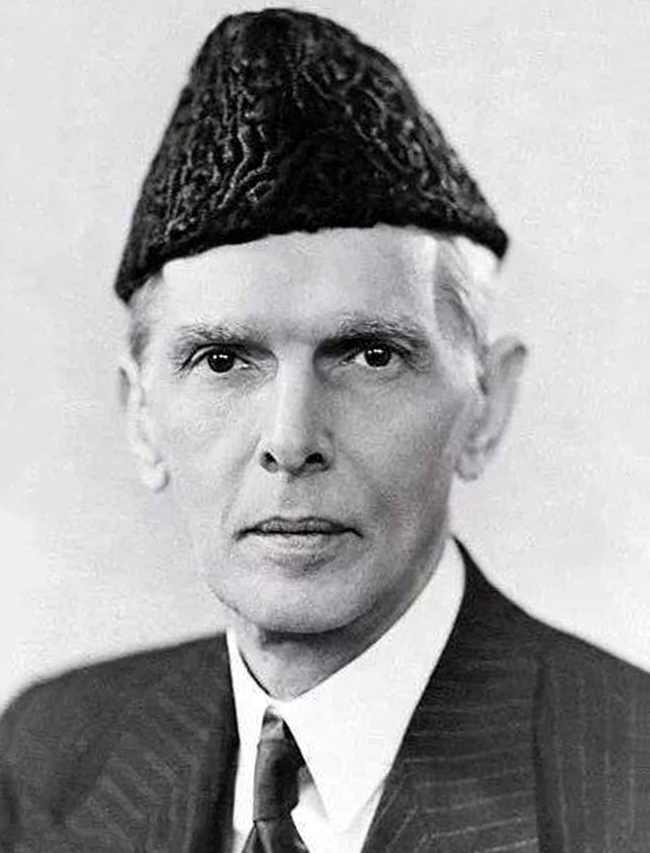
Although Shah Bukhari was born in Patna in 1892, he grew up in Punjab and was educated at Deoband. He was among the most outspoken critics of Jinnah and the League’s Pakistan movement and was renowned for his oratorical ability to captivate audiences for long periods.
The organisers of the Ahrar never regarded the League as the true representative of Muslim society. In their view, the League was an organisation “influenced by the British,” whose purpose was to divert Muslims from the anti-colonial struggle. They argued that if Pakistan were created and Muslims migrated there, the vast subcontinent would effectively pass into the hands of the Hindu majority—something unprecedented since the time of Emperor Ashoka. They also contended that two territories separated by twelve hundred miles could not realistically function as a single state.
In their criticism, the Ahrar frequently mocked both the proposed state and its leader. They derisively referred to Pakistan as “Palidistan” (a polluted land), and in parody of Jinnah’s title Quaid-i-Azam, they called him “Kafir-i-Azam.” Because of his Western lifestyle, Jinnah was also sometimes denounced as morally corrupt. The Ahrar further argued that, since many League leaders were educated in modern schools and colleges rather than in traditional religious institutions, an Islamic state could not be established under such leadership.
After 1947, Bukhari pledged loyalty to the newly created state of Pakistan. As a result, when the League leadership compiled a blacklist in December 1949 of nineteen organisations that had opposed it, the Ahrar were exempted. Following Partition, the organisation split into two factions based in Ludhiana and Lahore, both of which became active in anti-Ahmadi campaigns—networks of which later extended even to Bangladesh.
In contrast, the Khaksars became organisationally much weaker after 1947, although later generations of the movement continued limited activities under the name Khaksar Tehrik Pakistan.
Altaf Parvez is a researcher specialising in history. The article has been translated by Samia Huda.
Send your articles for Slow Reads to slowreads@thedailystar.net. Check out our submission guidelines for details.

Part I / From Artificial Intelligence to the Artificial State: Is the Trajectory Inexorable?
157th Birth Anniversary of Mahatma Gandhi / Gandhi’s return to Noakhali
Why does Tagore still trouble Bangladesh’s idea of ‘us’?

Can Bangladesh make better use of its zakat money?
Three revolutions that reshaped the world
Paradise lost and found: Rediscovering early modern Bengal
Unbound Mother: The making and remaking of Kaali in Bengal
Do great leaders make history, or does history make them?
Poison and cremation: A forensic history of colonial Bengal