

Muslim Sahitya Samaj Centenary
To the late thinker and writer
Kazi Abdul Wadud
Sri Charaneshu,
You have been resting in eternal sleep for more than fifty years now. You will never read this letter. Memory, conversation, politics, the world itself—these exist only for the living. Why, then, am I writing this one-sided letter to you? I write on the occasion of the centenary of the Muslim Sahitya Samaj. The founding of the Muslim Sahitya Samaj and the launch of the journal Shikha in 1927 constitute a golden chapter in the history of Bengali intellectual life. Today, that chapter completes one hundred years.
On this occasion, when Morshed Shafiul Hasan invited me to write something for a forthcoming volume, I could not decline his request, despite the endless pressures of professional life. Although I am an interested reader of the history of the Muslim Sahitya Samaj and the journal Shikha, I am not a researcher of the subject. It is not as though I can add any new factual material to what has already been collected. Yet, while revisiting your debates and, in particular, reading your writings, I found within myself an irrepressible urge to enter into conversation with you. It seemed to me that, a hundred years later, I—an elderly Bengali of a different generation and from another land—might draw from those discussions of your time certain reflections on the history of our Bengali selfhood, shaped by my own life experience, and present them in this one-sided dialogue with today’s globalised Bengali reader in mind. You may regard this as my humble offering to the memory of your collective endeavour and intellectual labour.
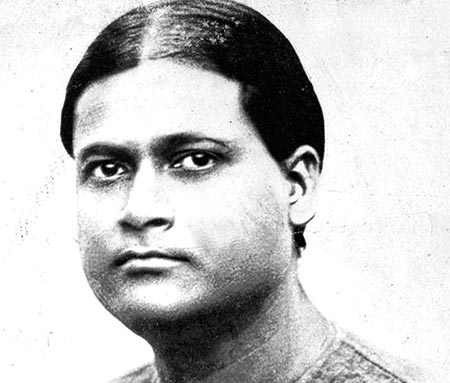
Among the leading figures of the Muslim Sahitya Samaj and the Shikha group, you are the only one I have seen with my own eyes. I saw you as a child, after Partition, in the 1950s. In Kolkata’s Park Circus area, you lived with your wife on Tarak Dutt Road. On that very same street, on the upper floor of a rented house, lived my two uncles and aunts who had recently arrived from East Bengal, along with my grandfather, grandmother, my mother’s cousin—whom we called Sonamama—and my maternal cousins. At the time, I could not have been more than ten years old.
You walked past our house every day along the street. You wore a gleaming white patbhanga dhoti and panjabi—only later did I learn that, in those days, respectable Bengali Muslim gentlemen on both sides of Bengal still wore dhotis. Your gait was slow, measured, and contemplative. One could immediately sense that you were a man of distinction. Seeing you, one of my aunts would say with reverence, “Look, Kazi Abdul Wadud is passing by.” One day I asked, “Who is he?” I still remember her reply: “A very famous writer.” I understood little beyond that. Yet, simply by looking at you, one felt that you were an exceptionally refined, dignified, and aristocratic figure.
Even at that young age, a subtle sense of “us” and “them” in relation to Hindus and Muslims would occasionally ripple through my childish mind. I knew that “Kazi Abdul Wadud” was not a Hindu name. I heard many stories about Partition and about my relatives’ life in Dhaka, but, as I have said, I did not fully grasp them. In those days, Park Circus was still home to several educated Muslim families. As far as I recall, the house of Humayun Kabir was nearby.
One of my maternal cousins—whom we called Chhorda, the younger son of Sonamama—had a neighbourhood friend called Babulmamu. Without Babulmamu’s presence, no festive meal during puja at our house felt complete. As a child, I understood that Babulmamu was Muslim; it produced a faint awareness of difference, yet I also knew that he was like family.
We—my father, mother, my younger sister, and I—lived across from Tarak Dutt Road, on Colonel Suresh Biswas Road. The owner of the house we lived in had sold it cheaply and left for East Pakistan. My father purchased that family’s furniture and settled close to his in-laws’ home. My childhood was spent in that neighbourhood.
I came to know you anew while studying in the higher classes at school. Your The Bengal Renaissance was part of our syllabus. By then, many Bengali Muslim writers whose works had been included in school textbooks during the premiership of Fazlul Huq had disappeared from our reading lists—figures such as Principal Ibrahim Khan among them. That we did not read the powerful prose of Abul Mansur Ahmad in our childhood remains a personal regret. At times it seems to me that, after Partition, our childhood became, in a curious way, even more Hindu than before.
You were among the few Muslim writers who remained. After Partition, you chose, deliberately, to spend your life in West Bengal. Only now do I realise how rare thinkers of your honesty, courage, and commitment to truth were among us. I often wish I could know what your experience of living in West Bengal was like. And it saddens me deeply that, despite your physical proximity, I did not, in my youth, make the effort to approach you and speak with you.
Perhaps every generation begins life with the conviction that the world has been newly born—or newly fascinating—only in its own time. There is little impulse to seek out the experiences of older contemporaries. It is only in old age that one realises how many questions there were to ask the elderly, and how one failed to ask them in time. Written history, however rigorously factual it may be, inevitably revolves around present-mindedness and the problems of the present. There is no escape from this condition.
And so I must turn to your writings to learn, indirectly, what questions you and your contemporaries wrestled with. Yet in reconstructing those questions, the concerns of my own time inevitably become entangled with them. This, then, is not quite a conversation. It is an attempt at self-dialogue—placing you within my mind as a pretext, moving back and forth between your time and mine. But it is also, as I said at the outset, my centennial tribute to the memory of you and your companions.
2
When I read about the Muslim Sahitya Samaj and Shikha, a particular quality of your sense of time becomes strikingly clear to me—especially when contrasted with the later period (1937–1947). In the years 1926/27 to 1931, despite the many justified and unjustified grievances that Hindus and Muslims held against one another, Partition was unimaginable. You—and perhaps everyone in the late 1920s and early 1930s—held this historical reality as a given. The absence of the assumption that Partition might offer a solution to Hindu–Muslim antagonism (as Abul Mansur Ahmad or Shyama Prasad Mukherjee would later come to believe) created a space for your thinking that became impossible once Bengali Muslims began to invest themselves in the imagination of “Pakistan”.
You assumed that Muslims and Hindus were historically and territorially bound to live together, and it was within this assumption that you reflected on the problem of modernity for Bengali Muslims. You observed that from Rammohan Roy to Rabindranath Tagore, Bengali Hindu society had pursued modernity and nationalism, yet within their notions of modernity or “nation”, Bengali Muslims remained marginalised, neglected, or in some cases almost entirely forgotten. Nor was this accusation unfounded. Rabindranath himself acknowledged it in various writings and statements.
Even now, I am astonished when I reflect that in 1875, when Bankimchandra Chattopadhyay so effortlessly wrote Vande Mataram with lines such as:
“Terrible with the clamorous shouts of seventy million throats,
and the sharpness of swords raised in twice seventy million hands,
who sayeth to thee, Mother, that thou are weak?”
[Translated by Aurobindo Ghose]
It did not occur to him, even in passing, that according to the censuses of 1872 and 1881, more than half of those seventy million voices and those twice seventy million arms belonged to Bengali Muslims. How else could Bankim have gone on to write for those seventy million people:
“In the arm, thou art might, O Mother,
in the heart, O Mother, thou art love and faith,
it is thy image we raise in every temple.
For thou art Durga holding her ten weapons of war,
Kamala at play in the lotuses
And speech, the goddess, giver of all lore,
to thee I bow!”
[Translated by Aurobindo Ghose]
Around 1940, the Pakistan Movement emerged as a response to this long-standing erasure, opening up the possibility of political sovereignty for Bengali Muslims. One might say that the period from 1947 to 1971 represents a linear history of the unfolding of that sovereignty. If necessary, that journey would begin by letting go of Hindu partnership. Without Partition, such political sovereignty would not have come into the lives of Bengali Muslims—or would have arrived much later. I was born after Partition, and therefore all my thinking inevitably accepts its reality.
Yet in the years 1926–1931, the conditions shaping your thought were different. Partition still lay beyond imagination. You believed that the pursuit of political and national sovereignty for both Bengali Muslims and Hindus, despite countless grievances and resentments, would have to be undertaken in mutual contact, hand in hand. That is why your thinking was not as directly political as it was cultural. This becomes particularly clear if one reads closely the three Nizam Lectures you delivered at Santiniketan in 1935.
You wrote explicitly:
“The conflict between these two fate-stricken groups [Hindus and Muslims] has now reached such a stage that it no longer seems strange for one side to imagine the elimination of the other as a means of ending the conflict. … This is, in fact, impossible. Neither the Hindus nor the Muslims of this country possess the strength to completely defeat the other. Any such attempt will result in a period of violence, followed by nothing but lingering resentment. … It is not religion or communalism, but knowledge and nationality that will undoubtedly become the refuge of the people of this country. But what will ‘nation’ mean? Bengali, Madrasi, Punjabi—or Indian? India has long been a single country. Given its geography, there is no salvation for its people except in being Indian. Yet for the present, it seems better to be Bengali, Madrasi, or Punjabi. … Of course, any Bengali-ness, Madrasi-ness, or Punjabi-ness that stands in opposition to Indianness is by no means desirable.”
You said this in 1935. Is it not fair to ask whether, after 1940, the political imagination of Pakistan—and its steadily unfolding reality—represented a complete defeat of the underlying idea of India contained in this statement? And yet, I would argue that even in defeat, the relevance of your thought does not diminish.
3
Thought does not consist of argument alone; it seems to me that thought also possesses a disposition, a temperament, even a character. Since your discussion of Hindu–Muslim antagonism begins from the cultural premise that neither can exist without the other, I discern in your thinking five qualities or traits that help me clarify my own intellectual project as well.
You never imagined that this problem could have a geopolitical solution; nor do I believe—while fully accepting, indeed welcoming, Bangladesh’s political sovereignty—that political division can offer any way of understanding, let alone addressing, the complexities of our shared history. I do not deny that division may, under certain conditions, become necessary. But such division is a contingent arrangement. The deeper question is this: if a genuine dialogue is to be sustained between two contending communities who share the same language and belong to the same cultural tradition, despite their many differences, what might be the conditions of that dialogue?
With this question in mind, I have read a number of your writings from the Shikha period (and later as well), and in the character of your thought I find, at least, a constellation of five qualities worth reflecting upon. First, your aversion to intensity; second, the honesty and courage of your thinking; third, your refusal to sever yourself entirely from those whom you criticise; fourth, your constant attentiveness to the idea of the common good—a trait that often found expression in your use of the word Prem (love); and fifth, the final disposition of your thinking that I wish to note: your refusal to think from the vantage point of the majority.
Without these qualities of thought, it is difficult to sustain an intimate yet conflict-ridden relationship between two communities. And yet, at the very foundation of your thinking about the Bengali condition lies a self-evident assumption—one that I, too, perhaps share: that when viewed through the lens of language and culture, there exists jagat juria ek jati ache, se jatir nam bangali jati (a single people across the world, called the Bengali people). In recognising this, I do not deny the political necessity, reality, or possibility that Bangladesh may have to define or imagine itself as a nation-state with a distinct “Bangladeshi” identity, or that Bengali people in India may partake in an “Indian” nationalism.
Let me now elaborate, in some detail, on those dispositions of your thinking that remain relevant to me even today. Many readers have already noted the “logical density of your prose, the graceful poise of your style, the refined and compelling elegance of your language”. My aim, however, is to bring this letter to a close by addressing why your mode of thinking itself remains pertinent in our present moment. For this reason, I wish to reflect separately on each of these five qualities that define the character of your thought.
One. Avoiding intensity in debate
You made this point in a letter written in the month of Kartik, Bengali year 1344 (October, 1937), to your friend “Taslim”, also known as Muhammad Wazed Ali (1896–1954). You wrote, “You have expressed disappointment that you did not find in me a strong enough intensity of attachment to the past.” In articulating the character of your thought, you went on to say: “Your disappointment is not difficult to understand. But it is intensity itself that I fear—and I believe everyone ought to fear it; this, you see, is my conviction.”
A closer reading of your letter makes it clear that by “intensity” you meant one-sidedness, a monocular mode of judgement. Your friend had argued that “so much debris has become entangled with whatever is good in religion that unless religion is entirely discarded, there can be no human welfare; otherwise, humanity will continue to entangle itself in endless complications.” Your response was: “Good and evil have always coexisted; the seeker, according to necessity, distinguishes between the two and proceeds along the path of life with the aid of that discernment.”
You further argued: “You will find an example of this even within your scientism—it is evident that alongside it, a fascination with destruction has also found a place of honour in the human mind. Who, then, can separate true scientism from this destructive impulse? No one but humanity’s concern for the common good—that devotion to society which we call moral or religious sensibility.” Otherwise, you wrote, “scientism is nothing more than a purified intellect; … a clear intellect is merely a powerful instrument, nothing more. With it, mountains and forests may be levelled to create new settlements, and with the same ease, a brother’s throat may be cut.”
In today’s world, amid a global environmental crisis, you might no longer have described the technological capacity to fell mountains and forests as an unqualified good. Yet the logic of your opposition to “intensity” remains easy to grasp. If Muslims and Hindus wish to carry their relationship forward amid their many conflicts, they must avoid this one-sided gaze—whether directed at themselves or at the other. You upheld this argument throughout your life.
You expressed the same idea in a different register when, at Rabindranath Tagore’s invitation, you delivered a lecture at Visva-Bharati on “Hindu–Muslim Conflict”. There you said:
“Among the synthesisers of the medieval period, Kabir perhaps occupies the foremost place, followed by Dadu and Rajjabji. … The form their thought assumed in their own time was not its ultimate form. Within all agitation lies, in a remarkable way, a signal to behold truth with calmness.”
Two. Honesty and courage in thought
No thinker can avoid one-sidedness of thought without valuing honesty. Yet courage is also required to give expression to that thought. One may be honest in one’s thinking and still, out of fear of public opinion, refrain from articulating the truth one has grasped. You, however, possessed that courage—perhaps because you were willing to endure censure and sharp criticism. From what I have read and understood of you, you maintained this position throughout your life.
It is well known that during the period of Shikha, the publication of your essay Sammohit Musalman (The Hypnotised Muslim) in Nabaparyay provoked the wrath of Monthly Mohammadi. And yet, criticising one’s own community is, in a sense, easier; others within the Shikha circle did so as well. What is far more difficult is to speak uncomfortable truths about a community with which one is in conflict, especially when one does so at that community’s own invitation.
In India, I have observed that orthodox Marxist Muslim historians have spoken out forcefully against Muslim communalism, while assuming that Hindu Marxists would take responsibility for criticising Hindu communalism. The reasoning behind this is easy enough to understand. But you did not take this convenient path.
Let me return once more to your lecture on Hindu-Musalmaner Birodh (Hindu–Muslim Conflict) delivered at Santiniketan. Here, you also enjoyed Rabindranath Tagore’s support and encouragement. Tagore wrote:
“When the mind, overwhelmed by the horrors of Hindu–Muslim conflict in this country, becomes breathless with despair and cannot see where this barbarity will end, one occasionally glimpses, from afar, bridges that embrace the two opposing shores with both arms. When the generosity of Abdul Wadud Saheb’s intellectual disposition appeared to me as one such broad pathway of reconciliation, I bowed to him with renewed hope. Alongside this, I perceived his thoughtfulness, his subtle and impartial faculty of judgement, and the distinctiveness of his expressive power in the Bengali language.”
Tagore was not exaggerating here. I remain struck by the way you could claim, as part of your own heritage and inheritance—through a combination of critique and appreciation—the nineteenth-century Hindu religious movements led by figures such as Rammohan Roy, Debendranath Tagore, Ramakrishna, Keshab Chandra Sen, and Vivekananda, much as you claimed Kabir or Dadu of the Bhakti movement as your own. You wrote:
“This Hindu religious awakening is not merely the pride of Bengal; it is the pride of the whole of India.”
At the same time, you reminded your audience that when the proponents of this movement attempted to argue that “Hindu civilisation is the greatest civilisation in the world”, that Hindu identity assumed a fierce or terrifying form in the eyes of Muslims. You then offered an observation of remarkable foresight—one that, to my mind, remains true even today:
“There is a striking resemblance between this fierce manifestation of Hinduism and the Wahhabi doctrine within Islam. The origins of both lie in the same source. The Wahhabi reaction arose from the weakness of the Muslim world; likewise, this fierce Hinduism was born out of centuries of weakness and failure among Hindus. … In the minds of Muslims today, hostility towards Muslims has come to be seen as one of the most prominent identifying features of Hinduism.”
Three. Your cosmopolitanism
This disposition runs through every page of your writing. Your modern cosmopolitan mind—to borrow, or rather to accept the invitation of, the late Binoy Ghosh’s phrase—seeks to draw what is best from every tradition. I often find myself wondering how your audience responded when, at the fourth annual session of the Muslim Sahitya Samaj, you presented a paper on Goethe in the month of Chaitra, 1336 (March, 1930). There is no way of knowing. Yet it is not difficult to see that through Goethe you were shaping your own ethical ideal of life—a process that would continue into your later years through your engagement with Rabindranath Tagore and your translation of the Qur’an.
You were attempting to situate your Bengali life within a larger moral vision. You wrote, “There was no intensity of ethnic self-attachment in Goethe”—once again invoking your aversion to “intensity”. It is clear that you were not a radical revolutionary of any extreme persuasion. You did not wish to relinquish either your commitment to universal humanism or your deeply felt sense of Muslim identity.
Four. Your theory of love
In May 1946, at the fifth session of the Gulistan Literary Circle founded by your friend S. Wazed Ali—at a time when the Pakistan Movement was gathering force—you presented a paper entitled Grihajuddher prakkale (On the Eve of Civil War). In that essay, you described Hafiz as “the master of the path of love”. And not only here: across the entire terrain of your writings, one finds this motif of love or affection woven throughout.
You sought to touch the bhuma (infinite). You wished to be human before being Muslim—yet also to be both, deeply. And this becoming, you insisted, can never be complete unless one condition is fulfilled: “unless love is given to the soul”. What, then, is this path of love? Is it merely emotion? You clarify the matter further in your discussion of Rammohan Roy: “There are two clearly discernible currents in Rammohan’s genius—on the one hand, he is a thinker, skilled in judgement; on the other, he is a lover of humanity.” Once again, love returns as a central idea.
Indeed, love permeates every layer of your thought. You go on to explain with greater clarity: “Rammohan was well acquainted with the medieval saints. But his great difference from them lies in this: unlike them, he was not a devotee and poet; he was a devotee and a seeker of human welfare—and the aim of that welfare was the enhancement of everyday worldly life.”
You approached the question of Hindu–Muslim antagonism in similar terms elsewhere: “At the root of our country’s political failure lies the pitiable self-absorption and lovelessness of our educated classes.” What does this lovelessness mean? You explain: “If it is said that at the dawn of political consciousness they worshipped the deity of contentment, and today they worship the deity of discontent, it may sound unpalatable, but it may not be untrue. They have failed to grasp that the ‘country’ consists of people of many classes and many levels of consciousness, and that service to the country means tireless striving for the improvement of all those lives—this understanding … could not be conveyed to those who were active in the political sphere.”
Your transformation of the devotional saints’ theory of love into a modern ethic of service—an ethic oriented towards the enhancement of the everyday lives of the masses—points directly to the modernity of your outlook. Yet one might also raise a critical question here: while you were an enthusiastic and creative inhabitant of the intellectual world associated with the movement for Buddhir Mukti (freedom of the intellect), your writings offer little indication of what kinds of institutional arrangements would have been necessary to connect that world of reflection with the sphere of political action.
Five. Rejecting the position of the majority
In a letter written to Abdul Qadir, published in the Falgun–Chaitra issue of the year 1337 (February-March, 1931), you wrote that, should elections be held, you would stand not for separate electorates for Muslims but rather with the camp favouring joint electorates. Needless to say, this was still a time when Partition could not yet be imagined. Yet the question of who constituted the majority and who the minority had already been firmly established in public debate. Considered across the whole of India, Muslims were a minority—what you called the “smaller group”—while Hindus were the majority, the “larger group”.
You wrote that “in the realm of politics, it is virtually impossible for the larger group to renounce the desire for dominance”, because it is “intoxicated by the pride of numbers”. “The resolution, therefore, lies in this,” you argued: let that dominance remain, but let it be exercised in a manner as beneficial as possible for all sections of the country. And this can only happen if the smaller group, casting aside the spirit of factionalism, devotes itself to creative endeavour and thereby guides the larger group along the path of the common good. “… To many this may sound like a riddle. But in truth, this may well be the law of the world. Ibsen has said: The strongest man is he who stands in the minority of one.”
It goes without saying that Pakistan did not come into being by following your counsel. No community trusted that its welfare could be secured while remaining in a “minority” position. Yet after Partition, you spent your entire life in Kolkata, voluntarily becoming a member of a minority community. You had no desire whatsoever for the “pride of numerical dominance”. In this, I discern a moral summons that is profoundly necessary in our own time.
4
Let me now return to my own time and ask why your thinking—and especially the thinking of your Shikha period—continues to draw me so powerfully. It draws me because within your thought I find a standpoint and a method from which to reflect on Bengali history while situated in today’s globalised world. It is not exactly the same standpoint; rather, in your time I glimpse a refracted image of my own—much as in a mirror the left appears as the right. For between the time of Shikha and my own lies the trench-like divide carved by the politics of Partition.
As a result, the historical fact that East Bengal is today an independent and sovereign nation-state—a state that could not have come into being without 1947, and whose emergence created the possibility of a sovereign national life for Bengali Muslims by displacing what was experienced as “Hindu dominance”—must be acknowledged with respect. Bearing that respect in mind, and with a sense of kinship towards Bengali Muslims, I must nevertheless reflect on Hindu–Muslim antagonism within the broader history of Bengal, and on its possible resolutions—or, if no final resolution is conceivable, on the many small, provisional, everyday settlements that must constantly be reworked and renewed. And I do so while standing within a globalised, planetary world.
Today, Bengalis from both Bangladesh and West Bengal are dispersed across the globe. The solution to Hindu–Muslim antagonism that Partition offered was, fundamentally, geopolitical in nature. It enabled us to bind “place” to “culture”, as Abul Mansur Ahmed once did in his book Pak-Banglar Culture. Theories of “Indian domination” or “Calcutta’s dominance” likewise emerged from this coupling of place and culture. Even the pejorative phrase that has recently entered Bangladesh’s political vocabulary—“agents of India”—has been made possible by this imagined spatial division of Bengali-speaking people. Without a political “solution” to Hindu–Muslim conflict, such terms would not have come into being.
It is precisely because of globalisation that this geopolitical solution no longer seems sufficient today. Bengalis on both sides now meet, converse, form friendships, and recognise one another—not only within their respective countries but also across the many parts of the world to which Bengalis have dispersed. Without 1971, would there have been such friendships, such movements back and forth, such rediscoveries of one another? The globalised Bengali today is no longer defined solely by India or Bangladesh; many now hold two or more passports. And yet it would be naïve to assume that old currents of conflict no longer circulate within these new identities. Even within friendship, one must swim against the undercurrents of difference in order to sustain it. And there is no obligation to do so—we sustain these ties out of our own volition. Hindu and Muslim Bengalis have been neighbours for a very long time; the history of that shared neighbourhood is far deeper and older than the history of our divided nations.
That is why I say that, although you and I belong to different eras, we share a common point of departure when thinking, as Bengalis, about the history of antagonism between Bengali Muslims and Hindus. You thought from a time before Partition could even be imagined as a practical solution. You wrote while claiming the cultures of both Hindu and Muslim Bengalis as your own heritage. I am one among the many Bengalis scattered across the world. I am not even a citizen of India. I, too, have no reason not to regard both Bengalis as my heritage. You never sought a political or geographical solution to questions of historical and cultural difference. It is here that I find something to learn from you—or, to put it differently, a reason to claim you as part of my own heritage and lineage.
It is in this spirit that I have tried to articulate some of what I learn from you, drawing especially on your writings from the Shikha period on Hindu–Muslim antagonism. Yet today, as the line goes, “Others abide our question; thou art free.” And so, like the disciple Ekalavya, I have placed you within my mind in the seat of Dronacharya and spoken these words to you.
Yours respectfully,
Dipesh Chakrabarty
Chicago, 11 December 2025
Dipesh Chakrabarty is Lawrence A. Kimpton Distinguished Service Professor of History, South Asian Languages, and Civilizations at the University of Chicago.
Translated by Samia Huda.
References
- In this connection, I wish to acknowledge with gratitude a few books:
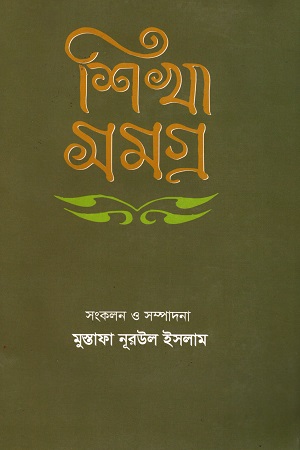
Khondkar Sirajul Haq, Muslim Sahitya Samaj: Social Thought and Literary Practice (Dhaka: Bangla Academy, 1984) — I am thankful to my former student, Dr Taimur Reza, for making this book available to me; Mustafa Nurul Islam (ed. and comp.), Shikha Samagra (Dhaka: Bangla Academy, 2003); Abdul Mannan Syed (comp.), Selected Shikha: Documents of the Cultural Movement of the Muslim Sahitya Samaj (Dhaka:?, 2000).The appendix to this last book contains a wealth of valuable information. - Kazi Abdul Wadud, Selected Works, Habib R. Rahman (ed. and comp.) (Kolkata: Karuna Prakashani, 2017), Vol. 1, pp. 234–235.
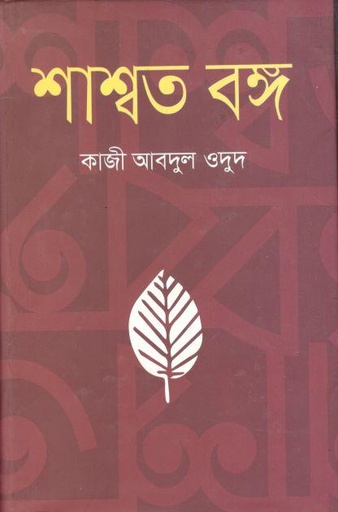
- Kazi Abdul Wadud, Selected Essays (Shashwata Banga) (Dhaka: Sky Publishers, 2012); see in particular the introduction by Ruhul Amin Babul.
- Kazi Abdul Wadud, Selected Works, Habib R. Rahman (ed. and comp.) (Kolkata: Karuna Prakashani, 2017), Vol. 1, p. 282.
- Ibid., pp. 281–282.
- Ibid., p. 228. Emphasis added by the author.
- For instance, the two essays in the first issue of Shikha by yourself and Professor Kazi Anwarul Qadir respectively — Bangali Musalmaner Sahitya Somossa (The Literary Problem of the Bengali Muslim) and Bangali Musalmaner Samajik Sanad (The Social Charter of the Bengali Muslim). See Mustafa Nurul Islam (ed. and comp.), Shikha Samagra (Dhaka: Bangla Academy, 2003).
- Kazi Abdul Wadud, Selected Works, p. 205.
- Ibid., p. 225.
- Ibid., p. 336.
- Ibid., p. 168.
- Ibid., pp. 218–219.
- Ibid., p. 221.
- Ibid., p. 265.
- Ibid., p. 267.
- In this context, another essential and thematically and temporally related work is Abul Hussain’s Amader Rajniti (Our Politics), in Shikha Samagra, pp. 592–600.
Send your articles for Slow Reads to slowreads@thedailystar.net. Check out our submission guidelines for details.