


Not voting is not an option

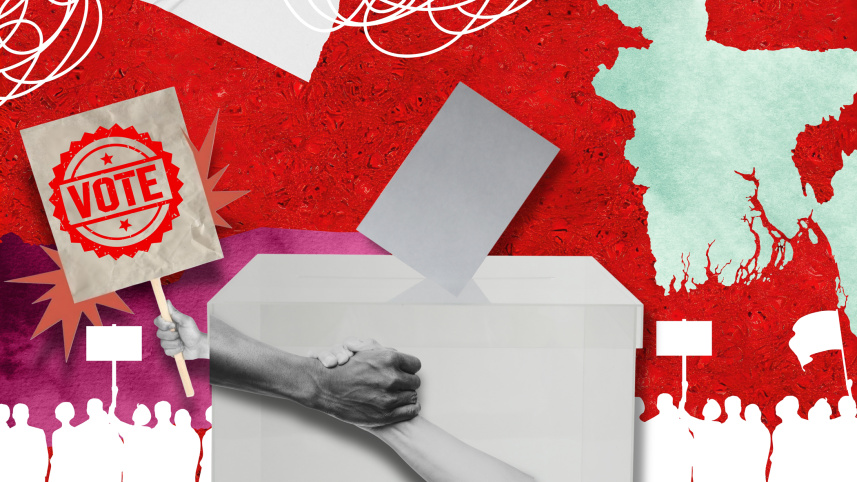
For those of us in our 20s and above, the 13th parliamentary election is the first where we hold real leverage, or at least much better leverage than people did in the last three elections. That’s why this election is rightly being referred to as Gen Z-inspired.
In the last three elections, votes were cast but that rarely translated into meaningful change in how the country was governed. We also had no real say in the formation of the interim government in terms of who was selected as an adviser, or how the government has since operated. Many had also hoped for an election to take place immediately after the July 2024 uprising, but that decision was left to be finalised by the interim government without any input from citizens.

However, this election, we have the opportunity to exercise our democratic power that was missing for more than 15 years, which was reclaimed through protests, bloodshed, and sacrifices by thousands. This means we finally have the chance to effectively shape the broader direction of the country.
Despite this reality, many are still contemplating opting out of voting altogether. This sentiment largely stems from their disappointment with the two dominant players in this election: BNP and Jamaat. But this argument for abstaining fails to consider the consequences of silence.
The BNP carries a history of corruption and extortion allegations. Worse, these practices from within the party re-emerged after the July uprising, with a report by the Transparency International Bangladesh linking 91.7 percent of political violence between August 2024 and December 2025 to the BNP. So, those who are frustrated by everyday corruption and the normalisation of extortion have reason to question whether such practices will intensify under a BNP government.
Jamaat, on the other hand, stood on the wrong side of history during the Liberation War. It opposed the formation of the People’s Republic of Bangladesh, the very state we inhabit today and the leadership of which Jamaat is vying for in this election. Then there is the concern of the party or party-aligned groups imposing religious morality upon citizens. Jamaat’s stance on women’s rights is another concern. Referring to men as the “managers” of women runs counter to the equal legal rights for all as enshrined in our constitution. The Jamaat ameer’s past “criticism” of the Women’s Affairs Reform Commission’s recommendation to recognise marital rape is also hard to forget.
If you are someone who believes that the promises of “zero corruption” are enough to outweigh potential regressions in the rights of half of the population, that calculation deserves serious reconsideration. Oppression is rarely announced loudly; it takes root quietly and usually over many years. Each time we justify the injustice someone faces on the basis of not being directly affected by it ourselves, we ensure that, sooner or later, injustice comes for us as well. Even claims of incorruptibility must be scrutinised. One must remember that no political entity is beyond accountability simply because it promises moral purity.
It is clear that both parties carry flaws, but this dilemma does not absolve one of their civic responsibility. If one believes that both options are flawed—even “evil”—the task is to make an informed choice for who represents the lesser harm, if not at the national level, then in their own constituency.
Many are also concerned about vote-rigging. Although there has not yet been any direct indication of this practice recurring, we must recognise that the very system that enabled vote manipulation still exists. Showing up at the voting booth can prevent this ill as every vote uncast might create an opportunity for manipulation.
The country’s future will be shaped, at least in part, by the choices we make, or refuse to make. Many argue that with the contest effectively reduced to BNP vs Jamaat, and with the absence of the Awami League, there is no real option at all. That both are problematic in different ways. But flawed is not the same as identical. BNP and Jamaat are neither interchangeable in every respect, nor will they govern in the same way. They will also not shape institutions, rights, and public life in identical terms.
Each voter must ask themselves: how do I want to live? What kind of country do I want my friends, my family, and my peers to inhabit? Democracy does not promise purity. What it offers is choice. And abstaining is also a choice, often the most consequential one of all.
Monorom Polok is a member of the Editorial team at The Daily Star.
Views expressed in this article are the author's own.
Follow The Daily Star Opinion on Facebook for the latest opinions, commentaries, and analyses by experts and professionals. To contribute your article or letter to The Daily Star Opinion, see our guidelines for submission.
 For all latest news, follow The Daily Star's Google News channel.
Comments