


StanChart, World Vision partner to launch climate resilience initiatives in coastal communities
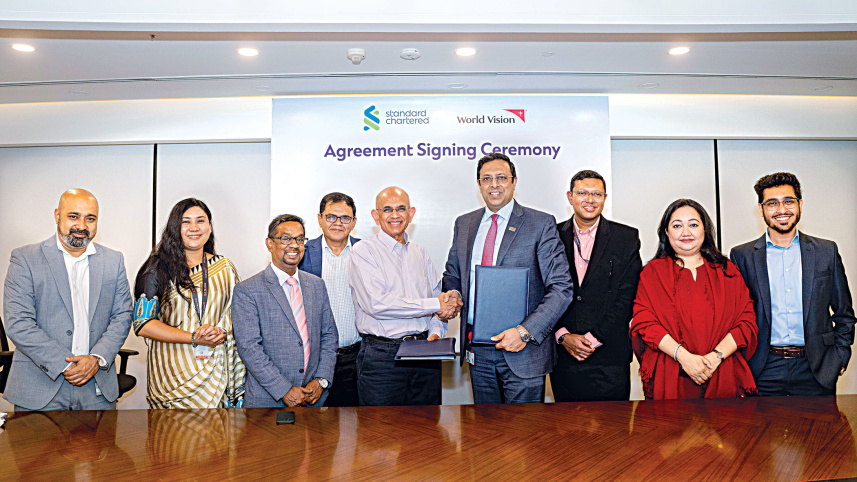
Standard Chartered Bangladesh has entered into a new partnership agreement with World Vision Bangladesh, a non-governmental organisation, to launch two climate resilience initiatives.
The projects are designed to protect livelihoods, restore fragile ecosystems and improve access to safe drinking water in some of Bangladesh’s most climate-vulnerable coastal regions, according to a press release.

One of the initiatives will focus on ecosystem restoration and climate-resilient livelihoods in communities surrounding the Sundarbans, Bangladesh’s first line of defence against cyclones, tidal surges and extreme weather.
The second initiative will address the urgent challenge of safe drinking water in coastal districts affected by saltwater intrusion, groundwater contamination and frequent cyclone damage.
Naser Ezaz Bijoy, chief executive officer of Standard Chartered Bangladesh, and Suresh Bartlett, country director of World Vision Bangladesh, signed the agreement in Dhaka recently.
Commenting on the partnership, Naser said, “In coastal Bangladesh, climate pressure is part of everyday life, whether it is land that can no longer be farmed or the daily struggle to find safe drinking water.”
“Through this partnership with World Vision Bangladesh, these projects will directly support around 25,000 people, helping families protect their livelihoods, access safe water and build resilience against future shocks,” he added.
Bartlett said, “At World Vision Bangladesh, we believe sustainable change happens when communities, businesses and development partners work together. We are investing in solutions that not only meet immediate needs but also secure a brighter future for children and families across Bangladesh.”
“This collaboration with Standard Chartered Bank will empower vulnerable families and help build a future of hope where every child can thrive,” he added.
Together, the two programmes are expected to directly benefit around 25,000 people, with significant participation from women and people with disabilities.
 For all latest news, follow The Daily Star's Google News channel.
Comments