


Who celebrates New Year first and last? Time zones explained
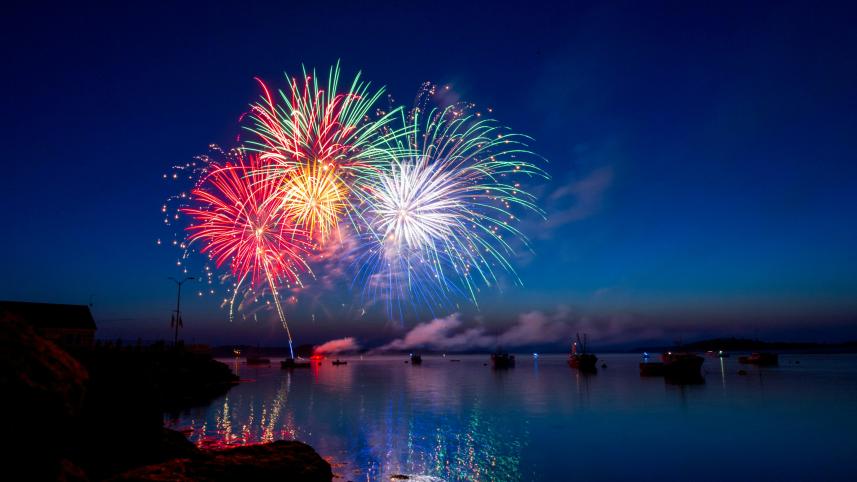
While you are just firing up the BBQ on New Year's Eve in Dhaka, some islanders in the Pacific are already asleep after their fireworks faded hours ago. That's the strange magic of time zones. The New Year does not arrive everywhere at once, but sweeps across the planet like a slow, glittering wave.
The New Year we celebrate on 1 January follows the centuries-old Gregorian calendar, kept in sync by Greenwich Mean Time. The world is neatly divided into 24 time zones. But do not picture it as perfectly straight lines, as time zones bend and twist around borders, islands, and political quirks.

Kiribati, from Oceania, is a tiny Pacific Island nation with just over 120,000 people and is one of the early birds to welcome the New Year. Its easternmost point, Christmas Island, is the very first to count down to midnight. It has villages named London, Paris, Poland, and, quite literally, Banana. In 1995, the country even realigned the International Date Line eastward so that everyone could celebrate together.
Following Kiribati, next in line to celebrate the New Year are Samoa and Tonga, from Oceania as well. Later, the celebration slowly rolls west through New Zealand and Australia, across Asia and Africa until the final countdowns echo over the Americas.
The last inhabited place to welcome the New Year is American Samoa, a US island territory in the Pacific. By the time midnight strikes here, nearly the entire planet is already living in the new year. Just 70 kilometres away, Samoa sits on the opposite side of the International Date Line, creating a 24-hour gap between them.
This peculiar time gap allows adventurous travellers to pull off the ultimate party trick. They ring in the new year in Samoa first, then hop over to American Samoa to do it all over again. Uninhabited US territories like Baker Island and Howland Island technically see the New Year even later, though the only witnesses there are seabirds and the stars.
 For all latest news, follow The Daily Star's Google News channel.
Comments