


A Woman In The Driver's Seat
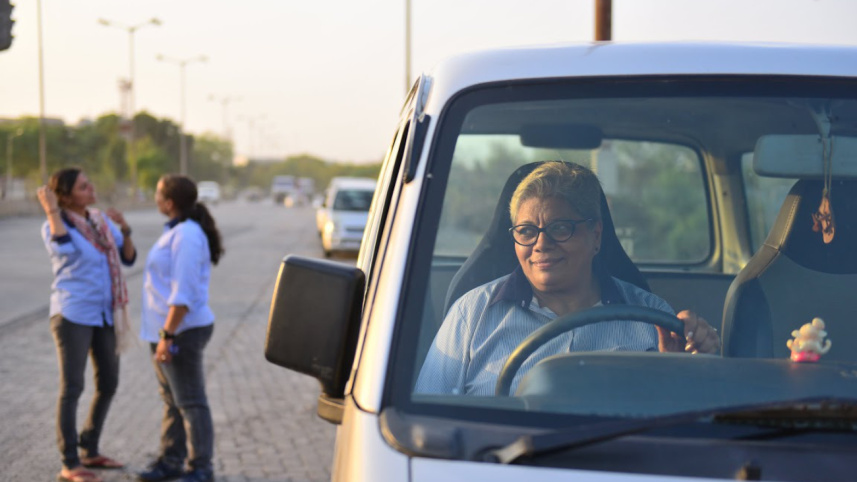
The traffic light turns green and RupaSwali pulls out onto the Western Express Highway in Mumbai, careful to avoid the swarm of motorbikes and auto-rickshaws zipping past. Suddenly an unruly bus runs the light in the other direction and careens straight towards her, laying on its horn. Swali is used to this and slams her breaks just in time, then glances at the passenger in the back seat to check for a reaction. Fortunately, the woman seems absorbed in her iPhone and unaware of the danger just averted.
Navigating the jungle of Mumbai's traffic has become second nature for Swali, who drives a taxi for a living. But until about four years ago, she had never sat in a car, let alone driven one.
 For all latest news, follow The Daily Star's Google News channel.
 That was when she decided to leave her physically abusive husband of 19 years. Even though she was born and brought up in Mumbai, India's commercial capital, she was unskilled and unsure of how to earn a living. She felt lonely, scared and helpless. To top it off, she had a teenage daughter to care for.
"I wanted a job that would provide me with dignity along with financial security," she said.
At around the same time, a management professional named Preeti Sharma Menonwas looking to set up an organisation that would help women become self-reliant. Of the nearly six million women living in this city, about half are daily wage earners living on the streets or in tiny shanties.
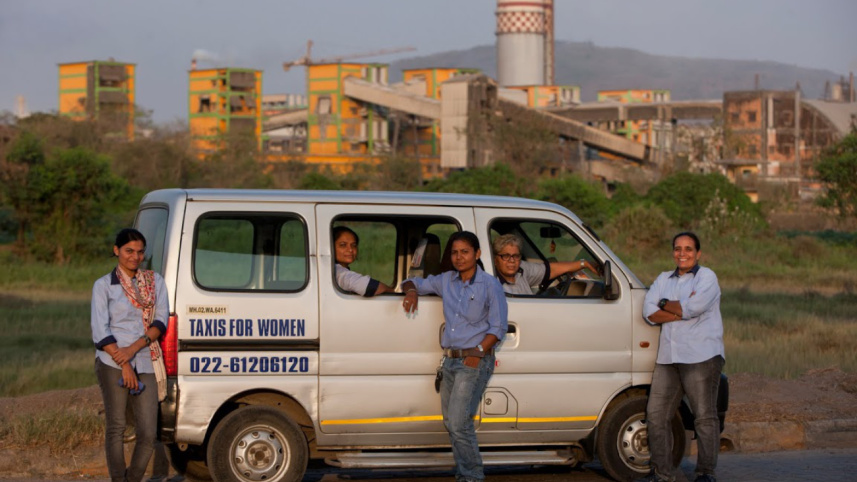
Menon created Viira Cabs ("Viira" means courageous woman) in June 2011 to provide sustained, dignified employment to underprivileged women. Swali was one of the first batch of 200 female drivers who participated in the Viira Motor Training Programme. After a rigorous six-month training programme, free of charge, 80 earned their licenses. Several have driven for Viira Cabs ever since. (The training programme has since been reduced to 12 weeks.)
Today, Viira Cabs has a fleet of 16 eco-friendly cabs and about 20 female drivers who earn an average of 15,000 rupees a month (US$240), working day and night shifts. Even though there are a few other women-drivers-only taxi services in the country, Viira is the only one that provides comprehensive training, including grooming, etiquette and self-defence. Every driver is equipped with pepper spray and a GPS system with panic alerts.
The service provides more than just skills and jobs. In a country where violence against women is prevalent, it provides a source of comfort for female passengers. According to the government, a woman is raped every 20 minutes in India. And these are just the reported figures.
India catapulted to infamy in December 2012 after the brutal gang rape of a student in a moving bus in Delhi. She later died of her injuries.
"Given the background of women's safety in the country, I think a woman-drivers-only cab service brought relief to many women who commute alone, especially at night," said Menon.
Her instincts were right. Viira has hundreds of loyal customers, such as Revati Sharma, 32, who lives in a suburb of Mumbai. "My parents are increasingly paranoid about me traveling alone to work," she said. "But I work in an advertising agency where there are no set hours. When I returned at 3 in the morning I used to see my mother waiting anxiously for me at the door. Now I call Viira when I have to return from late nights. And, frankly, I am also much more relaxed when a woman is driving. I can doze off to sleep."
Senior citizens and differently-abled people are also a large percentage of Viira's customers, claiming that female drivers are more thoughtful, helping them in and out of the cars.
But Menon said there are challenges as well, such as the cost of training and the high rate of attrition. "The women we employ come from low-income backgrounds. Most of them are the primary caregivers in their families, so whenever there is an illness or death in the family, they are the first to quit their jobs."
She feels bad that she has to turn customers away. "There is more demand than we can meet," she said.
For more information
Website: http://viiracabs.com/
Video: http://www.sparknews.com/en/video/viiracab-taxi-service-women-women
Comments