


A roving shelter for the homeless
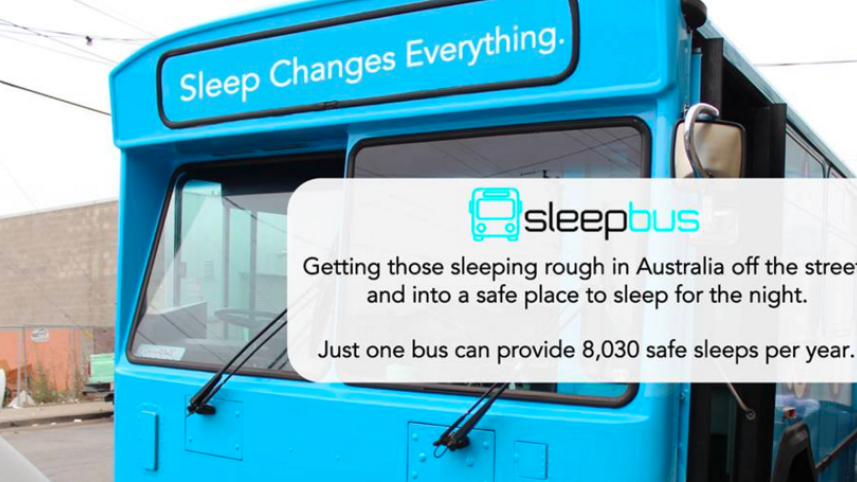
As he was walking on the streets of Melbourne, entrepreneur and business coach Simon Rowe was moved by the sight of a man trying to sleep in a concrete doorway on a busy street in the middle of the day. He began to wonder: how could he help the homeless people get a safe and comfortable sleep?
The result is Sleepbus, which will begin a three-month trial phase in June, then go into production around Australia and anywhere else around the world where charities are interested.

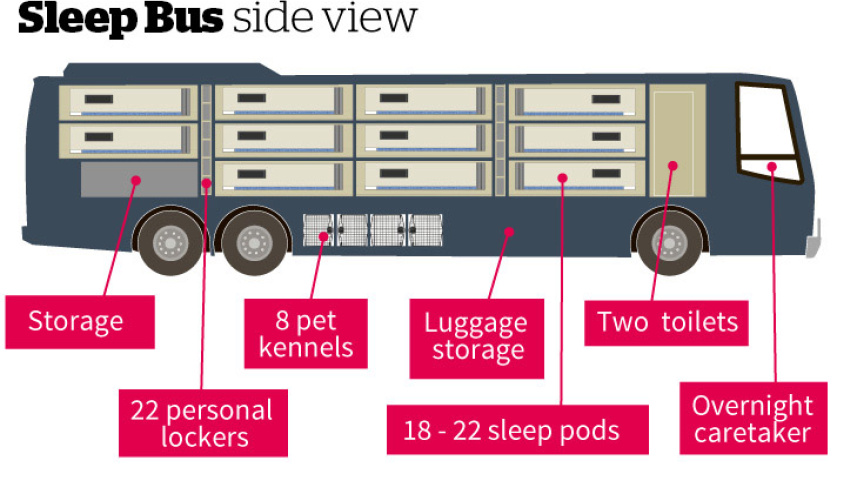
The bus can sleep 22 people at a time, each in an air-conditioned pod the size of a single bed. The pods are lockable and include a television, with a dedicated channel advertising local homeless services, a locker and a USB port to power phones and other electronics. The bus also features toilets, eight kennels underneath so people can bring their pets, and an overnight caretaker to make sure everyone sleeps safely.
Rather than providing food or clothes to the people who sleep on board and "duplicating" the offerings of other charities, the bus will park in one place and invite the charities to park next to them and help out those sleeping on board.
"I want it to be a hub of operations out in the field," Rowe said. "I think about the 19-year-old lad or girl who's had a fight with mum and dad. They end up leaving home, and they come and find Sleepbus. Outside Sleepbus is all these services providing clothes, help, food and guidance. They can get on the bus, have a safe sleep, and not get caught up with the wrong crowd. They won't fall deeper into the cycle."
Before he revealed his idea to the public, Rowe spoke to contacts he made in his time as a business consultant. He realised he could use corporate sponsorship to quickly get 319 buses on the road in 6 years – but he needed bus number one first.
He then launched a fundraiser on crowdfunding site GoFundMe in February, and within 6 days it reached its $20,000 goal, enough to buy the first bus. From there, the goal was increased to $50,000, enough to fit the bus, then $85,000, enough to run a 90-day pilot program to make sure the bus, and the technology inside it, worked as expected. He quickly met and exceeded each milestone.
Rowe does not draw a wage from the public donations and maintains two Sleepbus bank accounts: one of crowdsourced donation money, which goes solely towards the maintenance of the buses, and another of corporate donations, from which he will eventually run the administration of Sleepbus. He hopes to train the people who will sleep on board to help build up the buses as a hub for homeless people.
The idea has appealed to numerous overseas politicians and charities because it is cheaper than conventional homeless shelters, costing only $27.50 per person per night. What also sets the initiative aside is its mobility and its educational programs, which include taking the buses to schools to raise awareness about homelessness.
"It was not my intention to go overseas," Rowe said. "But on day one, I actually got more donations from the UK than I did from anywhere else. Then I was getting emails and calls from Irish politicians saying, 'We think you can solve our homeless issues over here'. So it certainly resonated with everybody. I even got an email this morning from Chicago, from a charity there, who said they'd like to build some Sleepbuses."
Some critics were sceptical of Sleepbus, concerned that there would be fights on board, that people would do drugs and possibly overdose, and that it would be difficult to keep it clean. Rowe said these concerns can be easily addressed.
The bus will have security cameras and a caretaker in case of security issues, and the police will be informed beforehand where the bus is located each night. It will be 'reset' every day, wiped down with disinfectant, and pillows, sheets and blankets will be washed before they're used again.
 For all latest news, follow The Daily Star's Google News channel.
Comments