


Success In Last 20 Years: Spice output jumps 6-fold

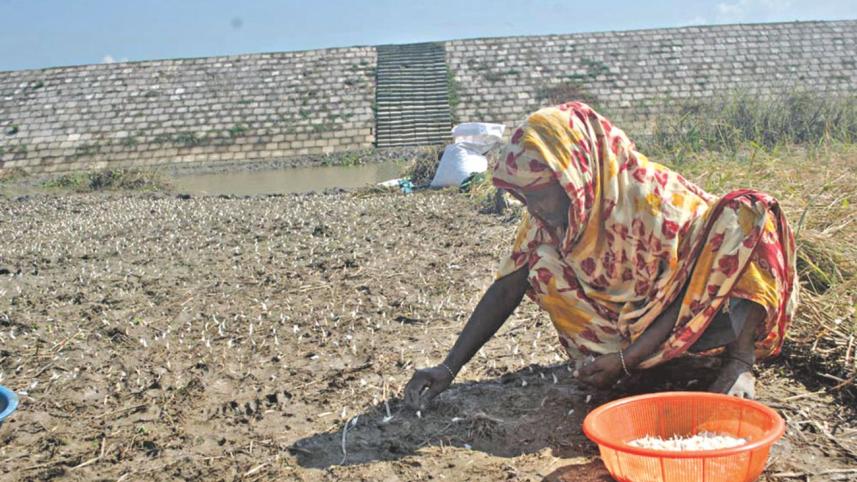
What is a common element in the aromatic wedding biriyani, The East India Company in the 17th century and one specialised research lab in Bogra? It is a quest for good spices to make everyday ordinary food extraordinary.
The lab's research in spice has made extraordinary progress.
 For all latest news, follow The Daily Star's Google News channel.
 A six times increase in spice production in the last 20 years has made it possible to cut down the country's import of the everyday cooking ingredient.
Work of the Spice Research Centre (SRC) has been the key to this success, according to scientists, researchers and planners. The centre has been working to develop high-yielding varieties of spices and is also continuing extension works among spice growers with new seeds and technologies.
The annual production of spices (onion, garlic, ginger, turmeric, chilli, coriander, etc.) has now risen to over 18 lakh tonnes from a paltry 3.08 lakh tonnes in 1996, data from the Ministry of Agriculture show.

The amount is still far short of the annual demand in the country by about 14 lakh tonnes. The rest of the demand is met through imports. For example, the country imports five lakh tonnes of onion a year to meet domestic demand.
Yet, the rise in spices output is considered phenomenal.
Established in Bogra's Mahasthangarh in 1996, the SRC has been operating under the Bangladesh Agricultural Research Institute (BARI).
BARI Director General Rafiqul Islam Mondal told The Daily Star, “The production of spices increased due to better breeds developed by the centre.”
Spices can be cultivated with other crops on the same field and under the shade of big trees, said Rafiqul.
“For example, in a mango orchard, we can easily grow ginger or other spices considered high value crops. Spices can be cultivated in short time, with less investment,” he added.
According to SRC, the centre has so far developed 31 high-yielding varieties of 14 spices which are now in production. The centre has successfully developed a number of spices, including garlic, onion, bunching onion, fenugreek, coriander, fennel, black pepper, black cumin, betel leaf, long coriander (Bilati Dhonia) and plum, locally known as alu bokhara.
A total of five high-yielding verities of ginger, fenugreek, and betel leaf are in the pipeline.
Other than the Bogra headquarters, the SRC has three regional spices research centres in Magura, Comilla and Gazipur, and four sub-regional centres in Lalmonirhat, Faridpur, Khagrachhari and Sylhet.
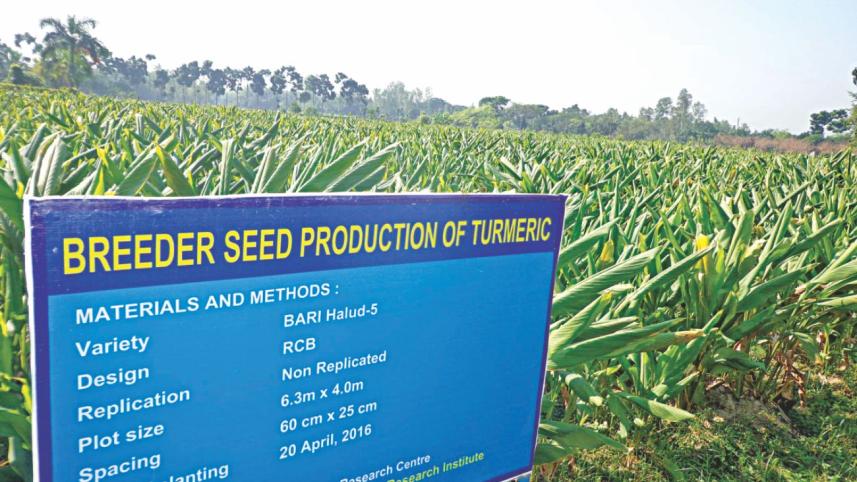
SRC Chief Scientific Officer (CSO) Kalim Uddin said the centre lacked good quality germplasm -- seed or plant tissue -- of cardamom, cinnamon, clove, pistachio, black pepper and other spices for research to improve the standard of the spices' varieties.
“The other problem is that our scientists do not get enough training. In the last 20 years, only 10 to 12 scientists went abroad, that too for short visits.”
Saying there is a crisis of seeds for the farmers, Kalim urged the seed companies and Bangladesh Agricultural Development Corporation (BADC) to make spice seeds available.
He said there is also a crisis of stress-tolerant germplasm of spices.
“It is possible to increase the production of spices further, if we could find solutions for these issues” Kalim observed.

More farmers are taking up spice growing because of the attractive income.
Take Hasan Ali Sarkar for example.
The farmer from Pabna's Chatmohar is hoping to make a good profit from garlic he cultivated on his one bigha land this year.
Continued rise in prices of this essential crop has encouraged garlic farmers to cultivate the spice on more land, he told The Daily Star.
Hasan said Tk 30,000 to 35,000 is needed to cultivate garlic on a bigha of land.
“I hope to get 30 maund of garlic from my plot, and with the current market price of garlic, I hope to earn at least Tk 1 lakh.”
Bishu Prang of the same area said last year he had planted garlic on 10 decimal, but this year he would cultivate on three bighas.
Bangladesh Bureau of Statistics data also show that garlic farming has jumped almost five times in the last 15 years, from 34,085 hectares in 2000-01 to 1,51,012 hectares in 2013-14.
(Our Pabna correspondent contributed to this report)
Comments