


No vaccines anytime soon

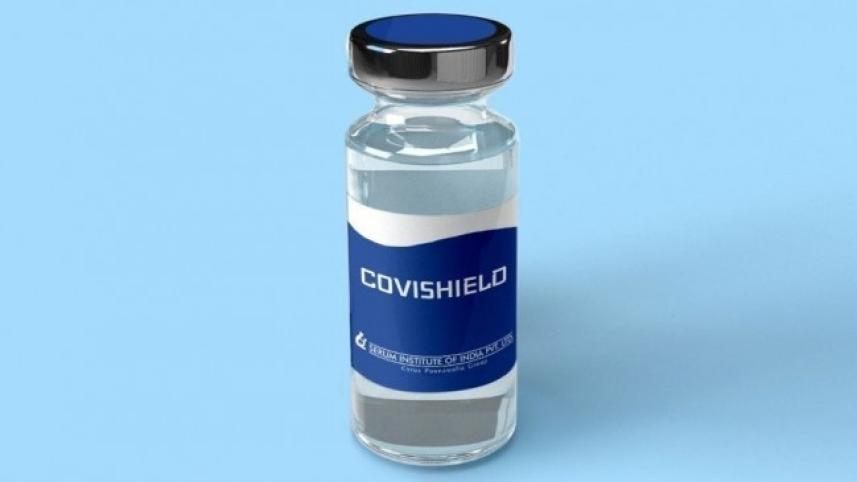
Bangladesh will not get the Oxford-AstraZeneca vaccine from India anytime soon, India has said.
The supply of the vaccine is delayed due to a crisis of raw materials and a huge internal demand in India, said a note verbale from the Indian High Commission yesterday.
 For all latest news, follow The Daily Star's Google News channel.
 Addressed to the Bangladesh foreign ministry, the note also mentioned that India had been trying to meet its internal demand as well as obligations made under contractual agreements by Indian companies to produce more of the vaccines being manufactured at the Serum Institute of India (SII), Pune, and by other prominent vaccines manufacturers.
The whole world is aware that key countries of the world have been withholding raw materials, which are critical for the manufacture of these vaccines, it added.
The note understandably indicated the US ban on export of Covid-19 vaccine raw materials that impacted production of Serum, the largest vaccine producer in the world.
The Indian response to the foreign ministry also implies that Bangladesh will get its purchased vaccine doses from Serum Institute of India, branded Covishield, once the dearth of the raw materials is addressed.
In the note verbale, the High Commission of India also stressed on co-production of Covaxin that was produced by Bharat Biotech.
It said icddr,b of Bangladesh and Bharat Biotech entered into an agreement in December last year for the phase-III clinical trials of the Covaxin, but the actual trials were still awaiting approval.
Mentioning that Covaxin has shown efficacy of over 80 percent, the note also said, "If the co-production of Covaxin, as offered by India, had begun in Bangladesh using our immense scaling up of capacity and presence of multiple manufacturers, 'Made in Bangladesh' vaccines would have been administered in our country and in the friendly countries as well.
"But that opportunity is still not lost, provided that we make the best use of it."
The development came after the Bangladesh foreign ministry wrote to the Indian high commission last week, seeking information about the supply of the AstraZeneca vaccine as per a contract.
The government on December 13 last year signed the deal with Serum to purchase 3 crore doses of AstraZeneca vaccine.
As per the deal, the government was supposed to get 50 lakh doses a month. But until yesterday, it only received 70 lakh doses in two installments.
The Indian government had sent 33 lakh doses as gift.
Amid a steep rise in Covid cases in India and reports of shortage of vaccines, the Indian government reportedly paused vaccine exports last month to meet domestic demand.
Serum CEO Adar Poonawalla in an interview to NDTV last week said, "There is no clarity on exports and we also right now feel that we should not look at exports for two months during these [Covid] cases. Maybe in June-July, we could start looking at small exports starting again.
"Right now, we are going to prioritise the needs of the nation [India] first."
Poonawalla said this situation would continue until at least July.
The Serum CEO's comments have also made global Covid-19 vaccine supply under the COVAX facility uncertain.
Poonawalla, on April 16, had asked US President Joe Biden to "lift the embargo" on raw materials to assist the production of Covid-19 vaccines.
"Respected @POTUS, if we are to truly unite in beating this virus, on behalf of the vaccine industry outside the US, I humbly request you to lift the embargo of raw material exports out of the US so that vaccine production can ramp up. Your administration has the details," Mr Poonawalla had tweeted.
Serum, which produces 'Covishield', uses bio-reactor bags from US firms ABEC and GE Healthcare to grow cells for their vaccines, according to reports. It also uses filters, microcarrier beads and cell culture media- all of which are in short supply.
'Serum has no right to suspend supply'
Beximco pharmaceuticals Managing Director Nazmul Hassan Papon yesterday said Serum has no right to suspend vaccine supplies to Bangladesh after the former had received the payment in advance.
The government should make stronger efforts to get the shipments on time, he told reporters at the capital's Kurmitola General Hospital after taking his second dose of the Oxford-AstraZeneca Covid-19 vaccine.
"The government paid in advance for 1.5 crore doses, but we received only 70 lakh... The government should make the demand loud and clear," Papon said.
Beximco is the local distributor of the Oxford vaccine produced by Serum.
Bangladesh's vaccination programme has been gripped by uncertainty after the Indian government reportedly barred the vaccine export last month.
Officials said the current inoculation campaign in Bangladesh would continue for 12 days at most with the stock.
With Serum failing to comply with the agreement, the Bangladesh government started exploring alternative sources in a desperate attempt to continue the inoculation against coronavirus.
Health officials said the health ministry made progress in securing five lakh doses of Sinopharm vaccine from China.
The government is now arranging "emergency use authorisation" to the Chinese vaccine, sources said.
Besides, Russia has offered Bangladesh the opportunity to either purchase 2.5 crore doses of Sputnik V or produce it locally with its assistance, Health Minister Zahid Maleque told this daily last week.
Comments