


Mitigating Vaccine shortage: Russia, China can be new sources

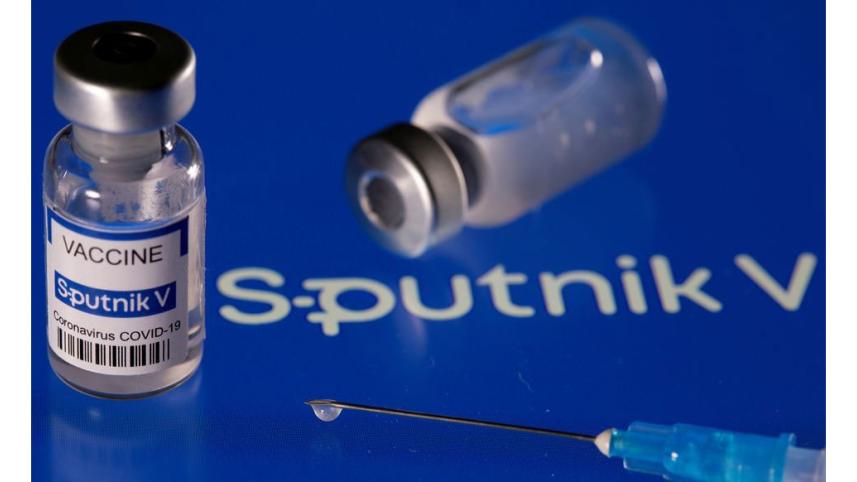
The government is seriously considering importing Covid-19 vaccines from Sinopharm of China and Russia's Sputnik V in order to ensure continuation of the ongoing mass vaccination programme.
An eight-member committee formed by the government submitted a report yesterday shortlisting the two companies, said committee sources.
 For all latest news, follow The Daily Star's Google News channel.
 "We have analysed various sources of the vaccine. We found that Sinopharm and Sputnik V is suitable right now," Maj Gen Mahbubur Rahman, director general of Directorate General of Drug Administration (DGDA), told The Daily Star.
With the Serum Institute of India failing to comply with the commitment to supply three crore vaccine shots in six instalments, the Bangladesh government started to explore alternative sources for the jabs, DGHS officials said.
On April 19, the government formed the eight-member committee and tasked it with finding alternative sources and submit a report to the Prime Minister's Office within seven days.
Mahbub, also the chief of the eight-member committee, said they are trying to bring vaccines from alternative sources as soon as possible to keep the mass vaccination process smooth.
The government is also pursuing manufacture of vaccine doses under joint collaboration with foreign countries.
The DG said they have sought documents from the authorities of Sinopharm and Sputnik V and once those are available, the vaccines will be approved for emergency use in the country after considering their efficacy and safety standards.
When asked about the price of those vaccines, the DG said, "Price is negotiable and will be fixed on a government-to-government basis."
Mahbub also said Bangladesh is planning for purchase and local co-production of both vaccines.
In early 2020, the Beijing Institute of Biological Products created an inactivated coronavirus vaccine called BBIBP-CorV. China, UAE, Bahrain, Egypt, Pakistan and some other countries across the world are currently using it.
The World Health Organization is yet to give the approval for the vaccine. But the WHO advisory panel said Sinopharm has presented data on their Covid-19 vaccines indicating levels of efficacy.
Russia approved the Sputnik V vaccine for domestic use in August last year.
India has recently approved the use of Sputnik V as the country faces shortages of jabs amid an intensifying second wave of the deadly Covid-19 virus.
Even as efforts are underway to secure alternative sources, the challenge of the hour is securing enough doses for people waiting for their second jabs.
There are around 35 lakh Bangladeshi people who are yet to get their second jab of Oxford-AstraZeneca vaccine, which is produced by Serum. But the government has 21 lakh doses in hand.
The otherwise smooth inoculation campaign suffered a blow after the Indian government on Saturday said export of AstraZeneca vaccine would remain suspended due to a dearth of raw materials and to accommodate local demand.
The decision left the Bangladesh government with no option but to suspended administering the first shot from Sunday.
Health officials said the vaccines in hand will run out within two weeks. If more AstraZeneca doses are not secured by then, the second-dose campaign will also be hampered, feared health officials.
"We are communicating with China, Russia, USA and even on a private level. Local companies are also giving us offers. But still, everything is at the communication stage. We are trying to materialise the discussions quickly," Health Minister Zahid Maleque told The Daily Star yesterday.
Asked whether the campaign of the second dose of AstraZeneca vaccination would be hampered, he said they would continue the second dose till the last available jab.
Experts said depending on a single source was a suicidal decision by the government and its officials failed to anticipate the crisis.
Dr Be-Nazir Ahmed, a former director (disease control) at the Directorate General of Health Services, said, "We have advised the government to administer the same vaccine in the second dose, as the issue of injecting two different vaccine is yet to receive scientific backing."
Although the government started the mass inoculation programme successfully with a large number of vaccines in hand, the problems started when Serum failed to fulfil the conditions of the agreement.
As per the agreement, Bangladesh was supposed to get three crore doses of vaccine which would arrive in the country in six monthly instalments. SII delivered the first consignment of 50 lakh doses properly but in the second consignment it gave only 20 lakh doses and has since not provided Bangladesh any doses.
Amid such a situation, the government has been in talks with vaccine suppliers in Russia (Sputnik V) and China (Sinopharm).
"Our discussion is going on. Everything is positive till now. But we cannot say anything until things are finalised," the health minister said.
Russia has already offered to sell Bangladesh around 2.5 crore doses of Sputnik V by December this year in phases, or assistance in producing the shots locally.
The Russian government also offered to export a further 3.5 crore doses in phases by April next year.
Apart from this, Sinopharm has already committed to giving six lakh doses of vaccine to Bangladesh free of cost and the organisation also said they are capable of supplying around 15 lakh doses per week, said health officials.
Md Sayedur Rahman, chairman of pharmacology department at BSMMU, said although in Bangladesh the existing gap between the first dose and second dose is eight weeks, "Oxford researchers demonstrated that 12 weeks' gap between the doses provides maximum protection.
"Accordingly, the UK government is continuing their vaccination programme with 12 weeks' interval [between doses]. Even Canada is giving [the second dose] after 16 weeks [of administering the first dose]. So, the Bangladesh government has eight additional weeks in hand to manage the vaccine," he said.
Prof Sayedur also drew attention of the policymakers to the surplus Oxford vaccine in the US and Australia as well as the possibility of formulating an agreement with the newly approved vaccine plant in Thailand. The government may intensify diplomatic activities to procure doses from these sources within the additional eight weeks, he said.
"During this pandemic, despite inadequate research evidence, some countries are using two different vaccines. Against this backdrop, the government may go ahead with this option as well," he added.

Comments