


Covid Pandemic Two more years to know when it’ll be over

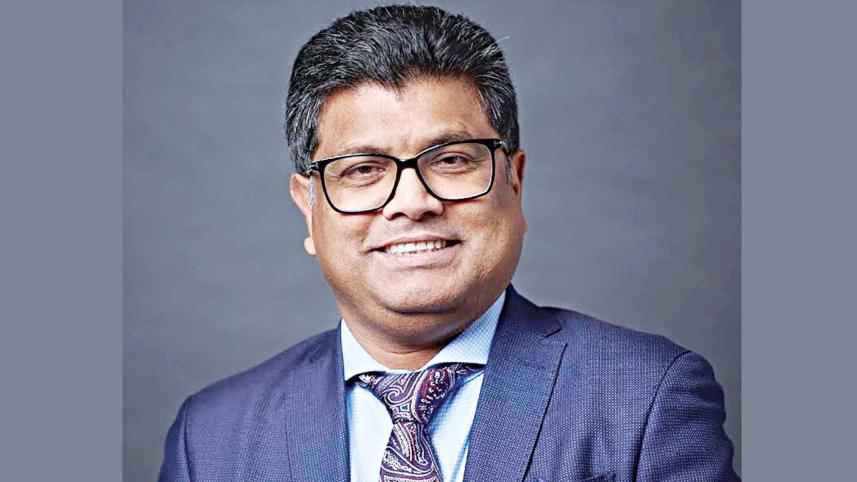
Dr Farhad Ali Khan, a Bangladeshi pharmaceutical physician and director of epidemiology at AstraZeneca, Sweden, has said it will take at least two more years to say when the novel coronavirus is likely to be totally eradicated from the planet.
"There are two faces of the end of such a pandemic -- social and biological. After one year of this pandemic, people are accepting this disease as a new normal of their life. On the other hand, researchers are trying to find medication, treatments, vaccines and validated evidence based preventive interventions," he told The Daily Star in an exclusive interview recently.
 For all latest news, follow The Daily Star's Google News channel.
 Farhad, who is involved in the Oxford-AstraZeneca vaccine development process, said once influenza was a pandemic, but now it has become an endemic.
"Biologically, any pandemic ends through a combination of infection of adequate number of people who develop immunity and vaccinating another group of people. These two together help achieve herd immunity. We expect that the situation will come under control as a huge number of people have already been infected and vaccines are being administered."
He said Covid-19 vaccines were authorised on an emergency basis by the global regulatory and drug control authorities.
"It is quite early now to say for how long the vaccine will provide protection as evidence gathered so far is not conclusive and further research and trials are going on. Usually, it is expected to provide some sort of protection for minimum 12 months."
About Bangladesh's tackling of the pandemic, Farhad said though the government had good intentions about containing it, initially there were some problems in the management and implementation of plans andespecially in having enough testing facilities and providing adequate protection to frontlines.
"But everything came under control of the government gradually. The pandemic burden was less in Bangladesh compared to many other countries of the world and Bangladesh tackles it well in such a resource constraint health system."
He said there was a fear that the virus transmission rate and death rate in Bangladesh would be high, but fortunately it was low due to the government's various timely and proper interventions.
"It [discovery and production of vaccine] is an evolving science and Bangladesh moved with the updated science. Managing vaccines in the initial stage was a big achievement for the country. Bangladesh did well in three aspects -- prevention, patient management and treatment, and vaccination."
The pharmaceutical physician said the pandemic has left a number of issues to learn from not only for Bangladesh but for the whole world. The pandemic has exposed the vulnerability of the healthcare system and showed how important the health care sector is.
"This pandemic has hit hard all the sectors. Bangladesh should focus on reorganising the public health facilities, establishing good disease surveillance and monitoring system, digitalisation of health care system and development of vaccine production facilities. Bangladesh should take up some short- and long term plans to contain the future pandemics."
Farhad said Bangladesh should now put emphasis on new drug research and discovery as it has some world class pharmaceuticals companies.
The public health expert also said the country should take up a long term plan to manufacture vaccines locally by in-licensing at the first phase and the government should come forward to support the pharmaceutical industry.
"As part of the short term plan, we excelled in procuring vaccine for the majority of the population. But now we should focus on manufacturing vaccines in the country. It is not a difficult task. This pandemic has opened up an opportunity for us. We should focus on vaccine production," he added.
Farhad said local Bangladeshi pharmaceuticals companies now produce mainly generic products. Their production has showed excellent growth in recent years and they are contributing more than 90 percent of the overall available medicines in the market.
"We have some world class pharmaceutical companies. Various research organisations have already sequenced genomes of Covd-19 but we could not take it to the next level. Now we should put emphasis on more research to go to the next level," he observed.
Farhad said if India can produce a vaccine, Bangladesh should also be able to do it as the country has huge expert manpower and infrastructure.
"We have to take discovery of drug to the next level. Pharmaceuticals sector has the potentials but we have to translate the potentials into reality. Bangladesh should participate in phase three and four trials. It is the right time to produce a new product."
The epidemiologist stressed the need for drawing up a long term plan and conducting research on vaccine efficacy and its adverse effects.
Farhad said he, as a Bangladeshi, took great pride in becoming a part of the vaccine development process.
"It was a big milestone for my career. It's a great satisfaction for me that in my career of more than 25 years in public health, epidemiology and as a pharmaceuticals expert, I could have the opportunity to contribute to overcome this crisis of the world as a Bangladeshi," he said.
Comments