


Low quality seeds cause sterility in maize in Lalmonirhat

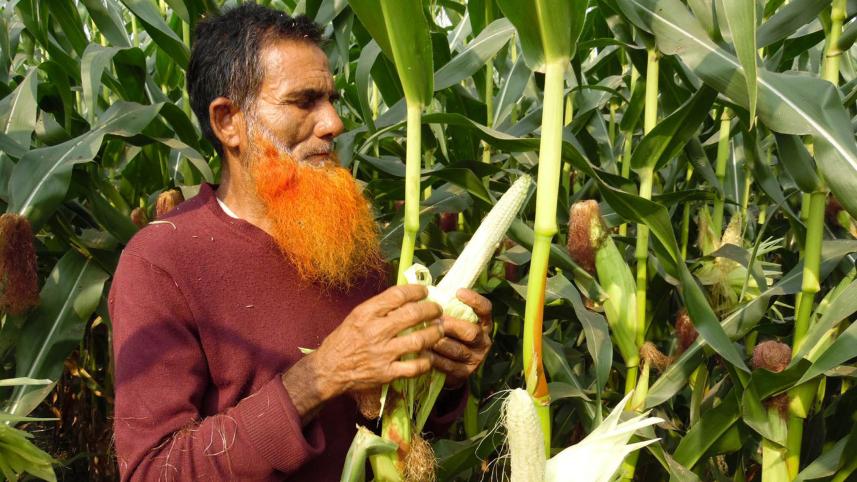
Allegedly poor quality seeds of maize is worrying maize farmers in Hatibandha and Patgram upazilas as the grain does not develop on the cob.
Siraj Uddin, 60, of Paruliya village in Hatibandha said, “I planted Kaberi Seed Limited's Kaberi-50 variety on three bighas but no maize grains developed on the cobs, whereas the growth of another variety on three bighas is normal.”
 For all latest news, follow The Daily Star's Google News channel.
 Mafizul Islam, 55, of the same village said they got bumper production of Kaberi-50 variety last year, so they were highly interested in growing it this year. “There are no grains on the cobs of Kaberi-50 variety as the seeds are substandard,” he added.
Hamidul Islam, 58, of Jamgram village in Patgram upazila said he cultivated maize of National Agricare Hybrid Seed Limited's CP-988 variety on 10 bighas of land but no grains developed on the cobs on five bigha lands, while grains on the other five bighas are normal.
“If we don't get compensation from the seed companies we will face many problems as we took loan from non-governmental organisations and banks,” said Nur Islam, 48, of Nabinagar village.
National Agricare Hybrid Seed Limited's Marketing Officer Masud Rana said if the seeds supplied by them were proved to be substandard they would give compensation to the affected farmers.
Senior Marketing Officer of Kaberi Seed Company Limited Shahinur Kibria said agriculture officials visited the areas to find out why no grains developed, adding that it might have been caused due to soil problem or shortage of micro nutrient. “We always import best quality seed for supplying in the local markets,” he added.
Bangladesh Agriculture Development Corporation's (BADC) Assistant Director Sohel Rana (Seed) said maize seeds are mainly imported by private companies. “The agriculture department monitors the quality of the seeds in the open market,” he added.
Deputy Director of the Department of Agriculture Extension in Lalmonirhat Bidubhushon Roy said soil samples from the affected areas were collected and sent to the lab for testing. “We do not know why there grains are not growing on the cobs, it may be soil problem, low quality seed or shortage of micro-nutrients,” he added.
Twenty two varieties of seeds were supplied by 10 seed companies for 25,000 hectares of land in the district this season.
Comments