


Livelihood on collecting oyster

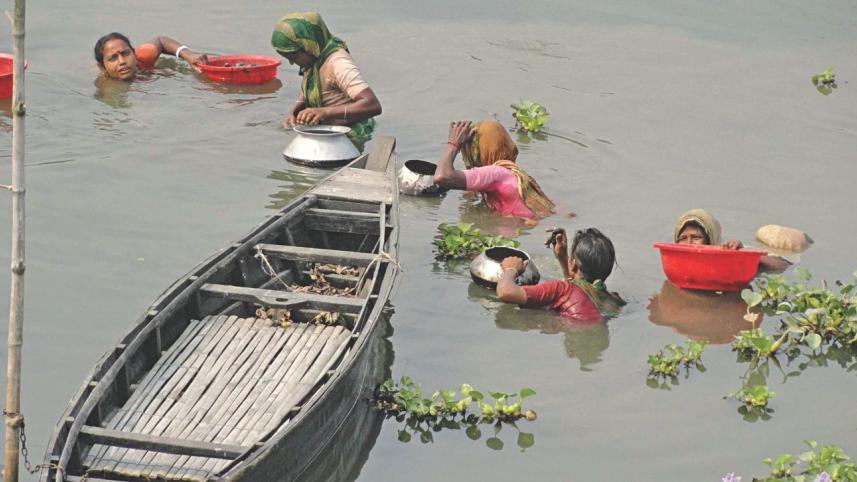
Collecting oysters from the Sati and Ratna rivers in the district is a means of earning a livelihood for ultra poor women in three upazilas of the district.
They collect the oysters between February and April every year, when the water in the rivers is waist deep. Oysters are used for producing poultry feed.
 For all latest news, follow The Daily Star's Google News channel.
 Oyster trader Hamidul Islam, 42, of Gokunda village in Lalmonirhat Sadar said at least 2,000 women are involved in collecting oysters from two rivers in 30 villages of Lalmonirhat Sadar, Aditmari and Kaliganj upazilas. “I purchase one maund of oysters from the women for Tk 170 to Tk 180, and sell them for Tk 210 to Tk 220 to the poultry feed producers,” he added.
Poultry feed producer Alamgir Hossain of Roypara area in the town said he gets a 50-kg bag of poultry feed from 60 kg of oysters, and sells each bag for Tk 480 to Tk 500 to the poultry farm owners.
Poultry farm owner Abdul Aziz of Jummapara area said poultry feed produced from oysters is essential for poultry birds as it makes the eggshell strong.
Asthma Begum, 46, wife of Nazrul Islam of Gokunda village said, “I am able to collect 25-30 kg of oysters after working from morning to afternoon every day.” They collect oysters under the water manually, she added.
“Collecting oyster is our tradition. Some years ago we had to sell the oysters to duck farm owners and lime producers at low rate, but now we are selling directly to the oyster traders,” said Santona Rani Das, 44, of the same village.
“I collect 30 kg of oysters every day from the Ratnai river,” said Khodeza Bewa, 48, of Shiberkuti village.
“I could not stay for long in the river when I started collecting oysters six years ago, but now I'm habituated to staying for a long time there,” said oyster collector Rehana Begum, 38, wife of Sahidar Rahman of Shialkhowa village in Kaliganj upazila.
Atiar Rahman, 45, a farm labourer at Hajiganj village of Aditmari upazila, said male labourers are not interested in collecting oysters due to the meagre income, but the women labourers are happy. “Sometimes we also collect oysters when we are without any job in the village,” he added.
Comments