


A noble effort

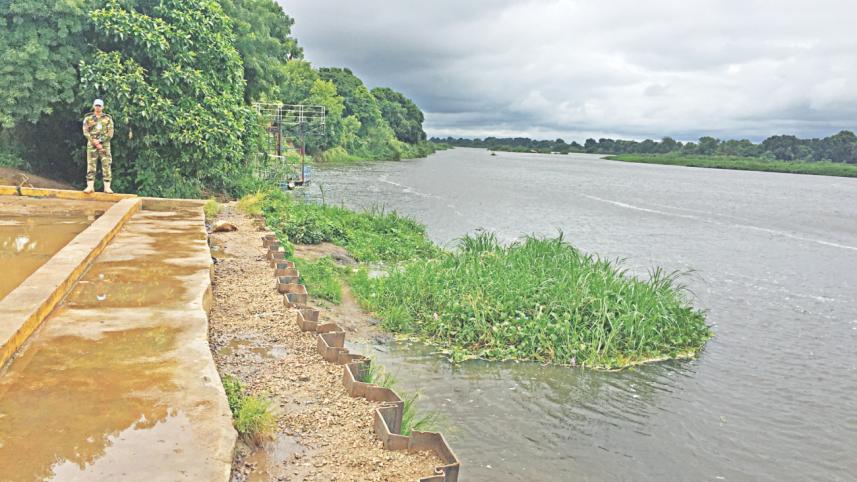
Water scarcity in the capital of South Sudan is so acute that the city dwellers have to depend on the water of the Nile. The White Nile flows by the eastern edge of Juba.
In South Sudan, only 55 percent of the people have access to safe drinking water. And due to increased costs of production, water suppliers in Juba are producing less and charging more, squeezing people's access to safe water even further.
 For all latest news, follow The Daily Star's Google News channel.
 Putting food on the table becomes the priority. Buying safe water, often and quite understandably, takes on a lower priority.
Considering the dire situation, Bangladeshi peacekeepers have started protecting the water point erosion in Nile that supplies water to all the United Nations staff members living in UN House Juba. It is also from this point that the locals collect water.
Lieutenant Colonel Mohammad Tariqul Alam, Contingent Commander of Bangladesh Engineer-1 said, “Rajaf water point is the only water collecting source for all the UN staff in UN House. We have dropped boulders to stop the erosion and keep water supply smooth in the city.”
He said approach road to the river was very poor and thus difficult for the water trucks to negotiate. “When we started working here, locals demanded that the 7km stretch be repaired, which we did.”
The local community is very happy, and has helped the Bangladeshi peacekeepers in the erosion protection project.
According to Unicef, acute shortage of clean water is posing threat to hundreds of thousands of severely malnourished children in South Sudan, and can lead to an increase in life-threatening waterborne diseases such as diarrhea and cholera.
Simon K, a Juba resident, said Rajaf water point is the main water point for the city dwellers but that point had eroded significantly during the last rainy season and their sufferings worsened.
“We do not have money and cannot afford to buy water. The river water is free but the road was dilapidated and the Nile bank was eroding. Thanks to Bangladeshi peacekeepers for their tremendous effort,” he said.
Although South Sudan has suffered from water scarcity for decades, its descent into war in 2013 after the country split has further exacerbated this.
The constant conflict within South Sudan has left the country's water systems neglected or destroyed. Poor rain combined with the after-effects of 2011 drought and the decreasing value of South Sudan's currency contrasted with the rising living costs have depleted the country's clean water supply, and made it difficult and expensive for the population to access clean and safe water.
Juma Jada, state minister for health in South Sudan, told The Daily Star that Bangladeshi peacekeepers have done a great job fixing Rajaf water point erosion and helped the local community greatly. “We hope that their cordial support will continue.” The state minister urged Bangladeshi peacekeepers to open a few more water collecting points for the city dwellers, which the peacekeepers assured them of.
Comments