


‘Burn Baby Burn’: The darkness under urban exuberance

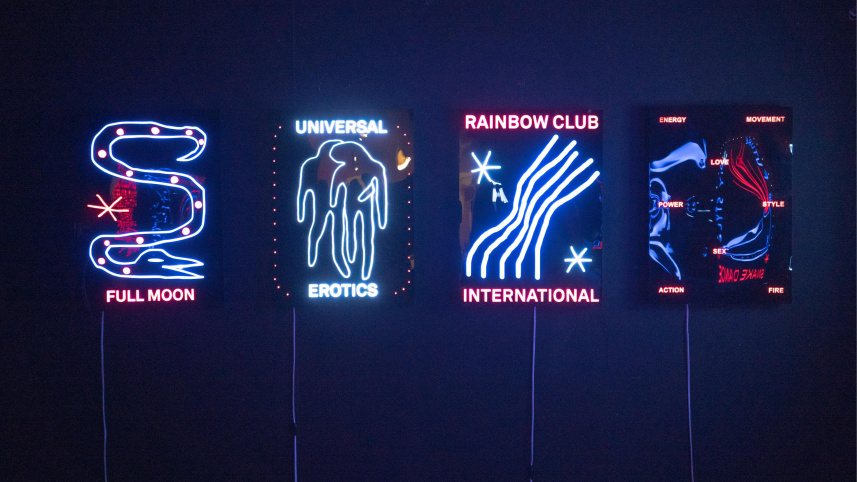
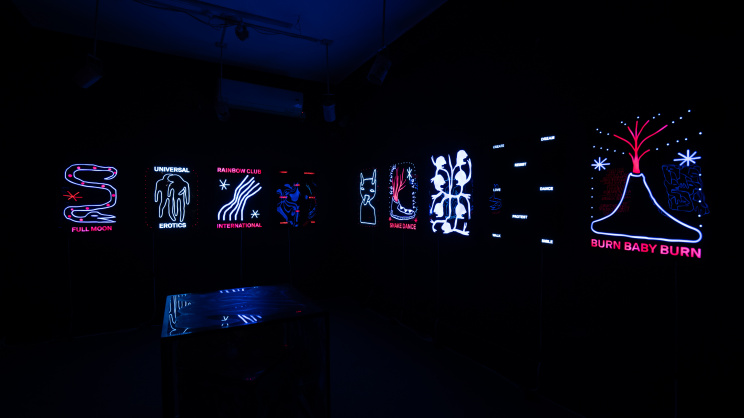
Dwip Gallery returns with another exhibition by Swiss artist Augustin Rebetez. Titled “Burn Baby Burn”, the show brings together works from Rebetez’s Light-box series alongside pieces by several emerging but underrepresented Bangladeshi artists, creating a visual space where brightness and unease coexist.
Last year, artists Augustin Rebetez and Sandrine Pelletier came to Bangladesh for an art show titled “Bang Bang”, hosted by Kazi Tahsin Agaz Apurbo and Dwip Gallery. Their distinctive visual language added a different flavour to Bangladesh’s exhibition landscape. Following the success of that show, Augustin returned with a second exhibition; this time engaging with a group of young local artists.

Augustin is deeply drawn to light-boxes, fascinated by how they animate spaces and sustain modern cities, especially at night. The accessibility of light-box production in Bangladesh further encouraged his experimentation. Through brightly lit visuals, he explores themes such as menstruation depicted as volcanic eruption, the menace beneath a cute feline exterior, optimism, and human primitiveness; expressed through deceptively simple forms.
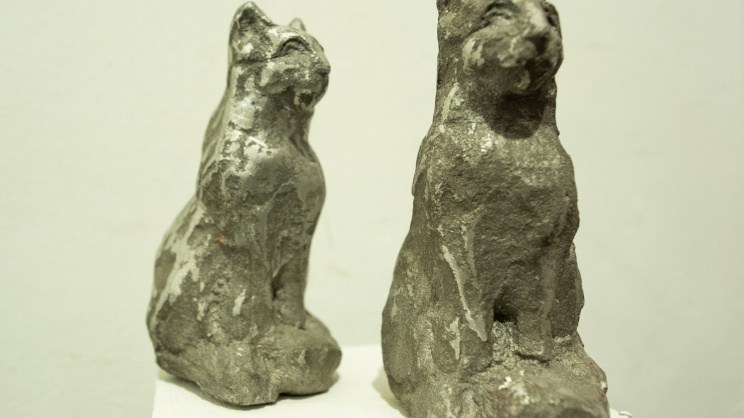
A hanging piece of clothing falling to the ground on a windy day reminded young artist Fairooz of women’s helplessness, where hope becomes the only anchor. Her hanging dolls echo this familiar vulnerability. A self-described cat mother of four, she has also created tiny, endearing cat sculptures.
Mong Shonie’s installation—a box within a box, requires visitors to explore it in darkness using a torch, echoing the way a secret prison holding people of different religions and ethnicities was discovered last year. The figures inside remain trapped within another enclosure, suggesting that fascism never disappears; it merely changes hands.
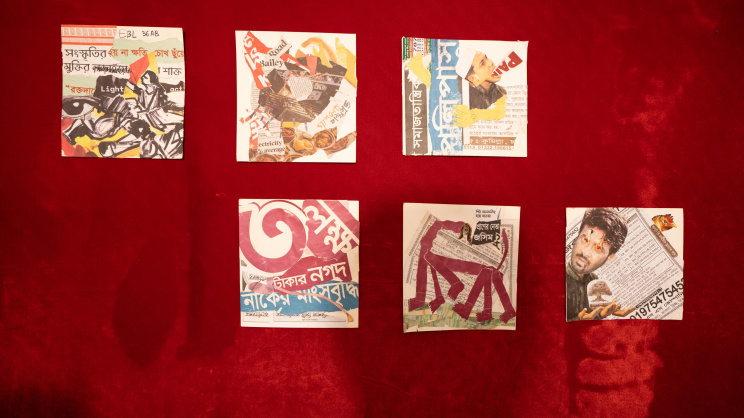
Jordan’s work addresses the brutal struggle for acceptance imposed by a narrow-minded, anti-diversity society. Her pieces reflect feelings of fetishisation and objectification, where identity becomes confined to its most consumable form. Suvro’s collage reinterprets the irony, hypocrisy and performative reality that define urban life.
Artists Akash, Anju and Bijoy line the gallery corridor with works grounded in conflict, pain, vulnerability, emotional distance and unconditional love. Tanzim presents portraits of loved ones that offer him peace. His red self-portrait, created during July and later eaten by cockroaches, becomes an accidental metaphor for self-decay. He also depicts the surge of mob violence that has intensified in Bangladesh since July 2024.
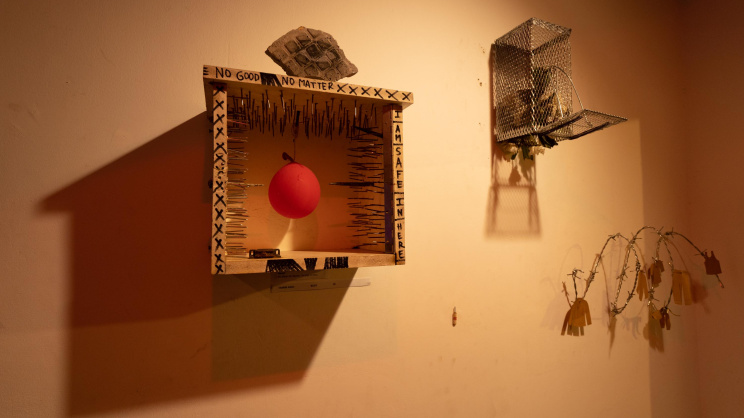
In essence, “Burn Baby Burn” adopts a contemporary psychological approach to art, prioritising media, inner states and social unease over tradition. With prices starting at just Tk 20, the exhibition remains accessible even to students.
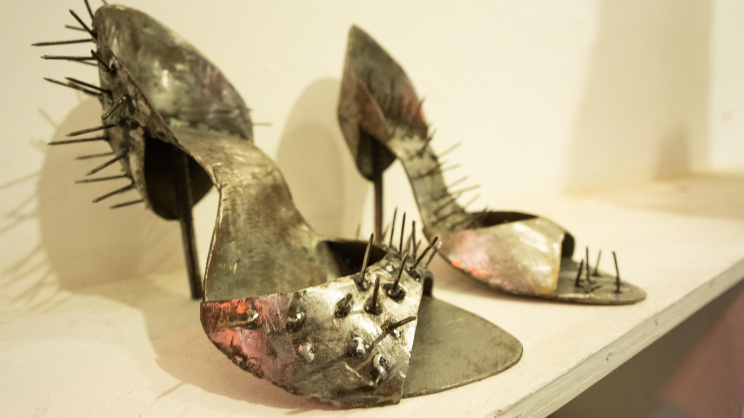
The exhibition was inaugurated on January 28, 2026, and will continue until February 5, 2026.
 For all latest news, follow The Daily Star's Google News channel.
Comments