


Jute rotting pollutes water in Lalmonirhat

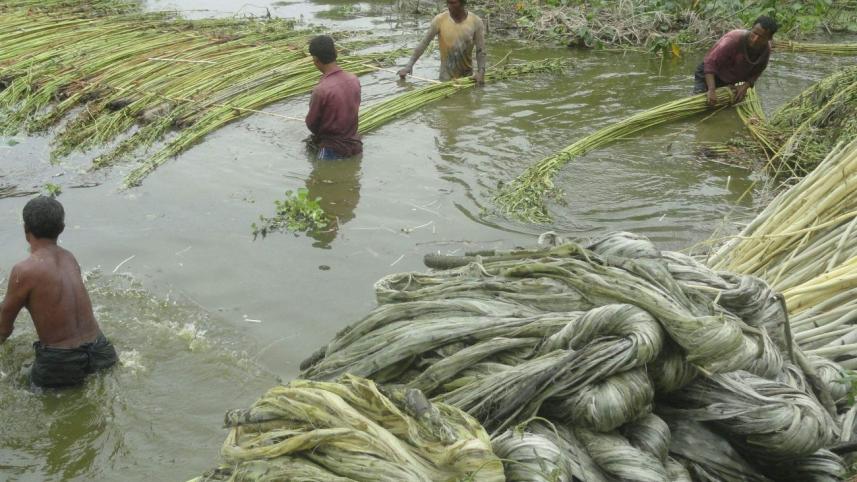
The jute farmers of the district have continued rotting the plants in traditional ways in rivers and other water bodies, causing serious water pollution, posing threat to fish and other aquatic creatures.
Ribbon retting, a method of rotting the plants with less water and in shorter time, is yet to gain popularity.

Visiting different areas, it was found that water of ponds, canals, rivers and other water bodies has turned black and stinky and fishermen at many places were getting dead or nearly dead fishes.
Introduced among the local farmers in a very limited scale a few years ago, the ribbon retting method remains virtually ineffective due to lack of steps for its promotion.
"We are not familiar with the system. A few farmers were informed about the new system but they did not show interest," said farmer Ruhul Miah of Mostofi village under Lalmonirhat Sadar upazila.
"I heard about ribbon retting system but don't know how to apply the method. I have cultivated jute on eight bighas of land this season and already harvested jute on five bighas of land. I have been rotting jute plants in a canal beside my homestead but I am facing trouble due to shortage of water in this water body," said Helal Uddin, a jute grower at Teesta village in Lalmonirhat Sadar upazila.
Narayan Chandra Das, a farmer of Sarpukur village of Aditmari upazila, said, "Ribbon retting method is easy but we took training on it only for a day, which is not sufficient."
This year total 4,250 hectares of land were brought under jute cultivation in five upazilas of Lalmonirhat, said officials of the Department of Agriculture Extension (DAE).
Generally farmers remove fibre after rotting jute plants in water for two to three weeks, but 'ribbon retting' system requires much less time and water for the purpose, said Safayet Hossain, deputy director of DAE in Lalmonirhat.
"Ribbon retting needs polythene and a big hole in the soil. After separating raw fibre from the jute stalk, it is kept in the water hole. A good numbers of farmers were imparted training in each of five upazilas," he said.
 For all latest news, follow The Daily Star's Google News channel.
Comments