


Health is wealth. Give it the due attention.

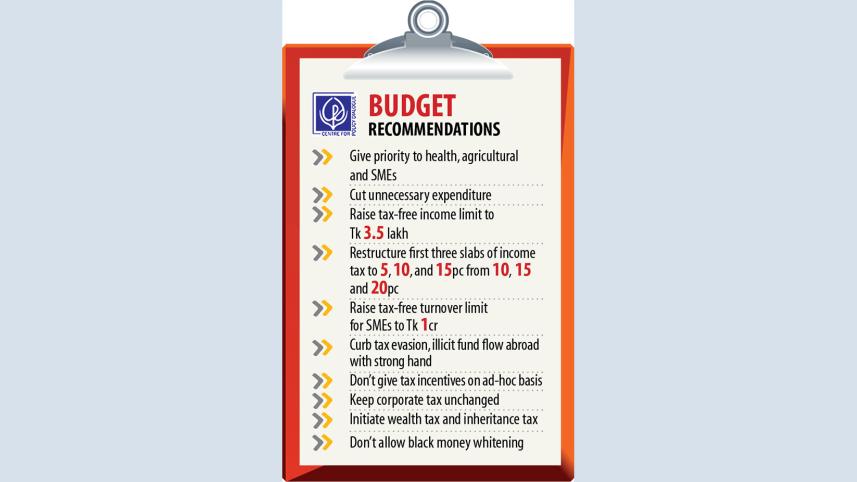
It is about time that the health sector takes centre stage in a national budget -- is the overarching missive of the Centre for Policy Dialogue as the finance division gets down to thrashing the budget for fiscal 2020-21.
"COVID-19 is a lesson for us," said CPD Executive Director Fahmida Khatun in a virtual media briefing yesterday to share the independent think-tank's recommendations for the upcoming fiscal year's budget, due to be unveiled on June 11.
 For all latest news, follow The Daily Star's Google News channel.
 The global pandemic has exposed the historically low level of public investment in the health sector. At present, it is a mere 0.9 per cent of the country's gross domestic product.
"Unfortunately, the health sector in Bangladesh has always been neglected," the CPD said.
Apart from the lack of infrastructure and equipment, the healthcare facilities in Bangladesh are also not staffed with adequate numbers of healthcare service providers.
"The total health system should be overhauled," Khatun said, adding that the out-of-pocket expenditure was the highest in Bangladesh amongst the South Asian nations.
The sixth five-year plan had a target of increasing investment in health to 1.1 per cent of GDP.
"It is yet achieved," she said.
The think-tank also recommended the government give priority to social protection and the agricultural and small, medium enterprises (SMEs) sectors in the budget to tackle the economic fallout from the pandemic and send the $274 billion Bangladesh economy on to a path of V-shaped recovery.
Because of the lockdown, production and supply chains were disrupted, income opportunities were lost and poverty situation worsened, with new poor population joining the ranks of the old ones.
All these adverse implications will have an immediate short-term and medium-term impact on the economy, which will need to be tackled through immediate policy response and by keeping the needs of the recovery phase in consideration, the think-tank said.
The economy had been facing various challenges such as the weak financial sector and falling exports before the outbreak of coronavirus and the rogue virus has only exacerbated the situation.
Besides, special focus should be paid on social safety net programmes (SSNPs) related activities given COVID-19 as the shutdown has wiped out income opportunities of the poor and vulnerable people.
The government should allocate at least 3 per cent of the GDP for SSNPs as outlined in the National Social Security Strategy, the CPD said, citing its previous proposals of providing cash to up to 1.90 crore families for two months at Tk 8,000 per month.
The pandemic has reemphasised the importance of food production and increased public food stocks for food security, it said.
"Fiscal 2020-21 will be a crucial period from the perspective of ensuring food security both in COVID and post-COVID periods."
The agriculture sector accounts for more than 40 per cent of employment and hence farming and rural economy should be given priority, said CPD Distinguished Fellow Mustafizur Rahman.
"This sector should get an adequate allocation," said CPD Senior Research Fellow Towfiqul Islam Khan.
To protect jobs and income, the CPD also suggested supporting domestic SMEs, which accounts for the majority of economic enterprises.
The SMEs were particularly hit hard for the lockdown, the CPD said, while suggesting raising the tax exempted yearly turnover limit for the enterprises to Tk 1 crore from Tk 50 lakh for fiscal 2020-21.
Furthermore, the companies that are incurring losses in fiscal 2019-20 can be allowed to carry back losses against taxable profits for the two previous years.
The CPD said the government will require additional resources to revive the depressed economy and an expansionary macroeconomic policy should be pursued in fiscal 2020-21.
"Pursuing such an approach will likely increase the fiscal deficit in the next budget. However, given the emerging scenario such a stance is conceivably the right one," Khan said.
The low oil prices and falling exports earnings will reduce pressure on public expenditure. At the same, the government should cut revenue expenses and reprioritise annual development programmes to reduce the pressure, Moazzem said.
The main focus should be curbing tax evasion and illegal fund transfer abroad, said Rahman, while citing that Tk 5 lakh crore had been siphoned off abroad in the last 10 years illicitly through various channels.
"If we could curb the transfer, the money would have been useful," he said, while also suggesting wealth and inheritance tax.
The CPD suggested the National Board of Revenue refrain from all ad-hoc provisions of tax incentives.
"NBR needs to be selective and careful in the next fiscal year as more demand for incentives will be lined up in the wake of COVID-19."
The think-tank said the corporate tax rate should be unchanged as some measures have already been taken in support of large entrepreneurs.
It also opposed giving any opportunity to whiten the black money.
"There may be increased pressure for this on the ground of mobilising additional money in the backdrop of likely difficulties in resource generation in fiscal 2020-21. As is well known, this measure has failed to register any notable response in the past."
To ease pressure on individual taxpayers, the CPD said the first three slabs of income tax – 10 per cent, 15 per cent, and 20 per cent should be changed to 5, 10, and 15 per cent respectively, at least for the next two years.
It also recommended increasing the threshold for tax-free income for individuals from Tk 2.5 lakh to Tk 3.5 lakh.
The twin moves would increase taxpayers' disposable income, which, in turn, would boost domestic demand and defibrillate the economy that has been on an induced coma since March 26 to slow the spread of coronavirus.
The think-tank also demanded expedition of installation of e-cash register -- the Electronic Fiscal Device -- for effective implementation of the new VAT law and increase revenue.
The CPD was also critical about the relaxation of lockdown at a time when the risk of community spread remains high.
The other countries have reopened their economies by following the scientific procedure, Khatun said.
"This is also necessary in case of reopening here. What is the necessity of livelihoods when life is at stake? Risk of spread of coronavirus is high in shopping malls, transport and markets."
The CPD carried out an opinion poll on whether shopping centres need to reopen and found 93 per cent of the participants opposed the move.
Some 96 per cent of the respondents said they would not go shopping even if the shopping centres are open.
Comments