


BGMEA seeks review of labour law changes

- Apparel leaders reject labour law amendments
- BGMEA warns union threshold change destabilising
- Dual benefit schemes raise business concerns
- Industry urges deferment of LDC graduation
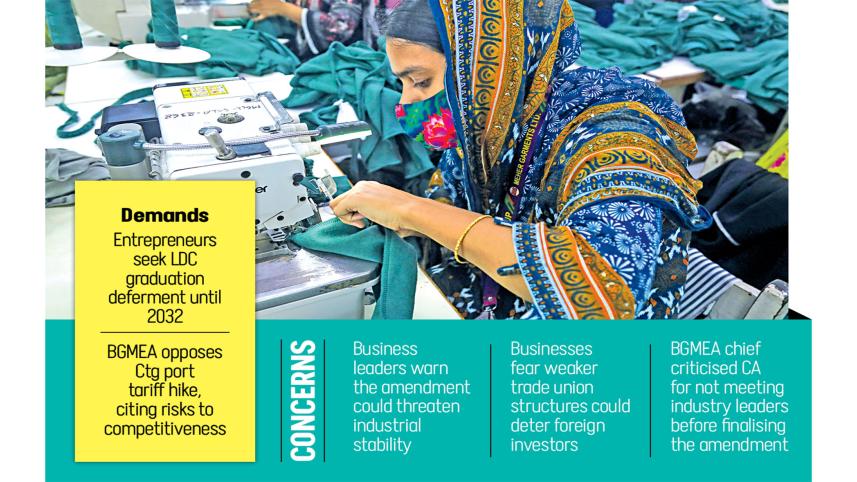
Apparel leaders have called on the government to review recent amendments to the labour law, particularly changes concerning the definition of workers, the threshold for forming trade unions, and the benefit package.
A week after the advisory council approved revisions to the draft ordinance, the business leaders said the final version did not reflect the agreements reached earlier at the Tripartite Consultative Council (TCC) meetings.
At a press conference at the Bangladesh Garment Manufacturers and Exporters Association (BGMEA) office in Dhaka yesterday, they said that the amendments could affect both domestic and foreign investment, as well as overall stability in the industrial sector.
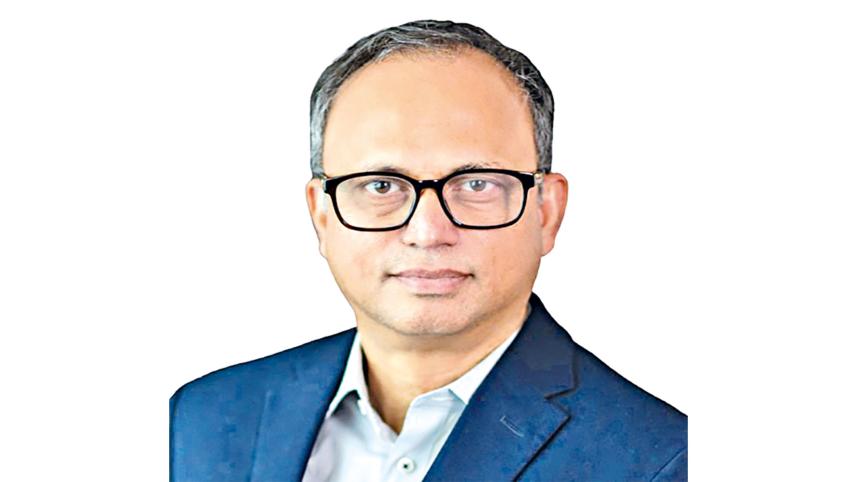
Explaining their objections, BGMEA President Mahmud Hasan Khan said the government has approved a broader definition of labour, which was neither part of the consultative council's agreement nor consistent with the existing labour law.
Khan, reading from a written statement, said the tripartite council agreed that at least 50 workers would be required to form a trade union, but the final version reduced that threshold to just 20.
On the third point, the BGMEA president said that the tripartite council also decided companies could choose between a provident fund and the government's Pragati Insurance scheme for their workers.
But the advisory council later approved a provision allowing workers to opt for both schemes, which Khan said would increase costs, create administrative complications, and lead to fund mismanagement.
He said the business community had sought an appointment with the chief adviser to express their opinions and observations regarding the amendments, but had been unable to meet him.
For four months since taking office, we have repeatedly requested appointments with the honourable chief adviser to share our concerns, but he has not given us any time. I say this with frustration … when vice president-level executives from Starlink come, he gives them time, but to a 40-billion-dollar export industry, he does not. He must take responsibility for that. If he doesn't give us time, how can I express our concerns?
"For four months since taking office, we have repeatedly requested appointments with the honourable chief adviser to share our concerns, but he has not given us any time," said Khan.
He added, "I say this with frustration … when vice president-level executives from Starlink come, he gives them time, but to a $40-billion export industry, he does not. He must take responsibility for that. If he does not give us time, how can I express our concerns?"
Khan said that allowing just 20 workers to form a trade union would weaken the structure of industrial relations in Bangladesh compared with other Asian neighbours, sending a negative signal to foreign investors and discouraging future investment.
He said the most troubling aspect is that several decisions agreed by all stakeholders during the council and working committee meetings were later changed by the advisory council without consulting the key stakeholders.
Meanwhile, the interim government has ratified three ILO Conventions intended to strengthen labour rights, safety, and protection from violence and harassment at work.
The move comes amid renewed pressure from trade unions and international partners, including the European Union (EU) and the US, to improve labour conditions in Bangladesh.
The business leaders also urged the government to negotiate with the United Nations (UN) for a three-year deferment of the country's graduation from the least developed countries (LDC) group, to allow more time for preparation until 2032.
 For all latest news, follow The Daily Star's Google News channel.
 The BGMEA president said the private sector is not ready yet for a smooth transition due to high bank interest rates, an ongoing energy crisis and rising wages.
Business leaders at the programme further criticised the government's decision to raise tariffs at Chattogram port, saying the higher charges are eroding competitiveness.
They demanded a reduction in the new rates, noting that tariffs have increased by 41 percent for using the port.
Comments