


The wilderness in me
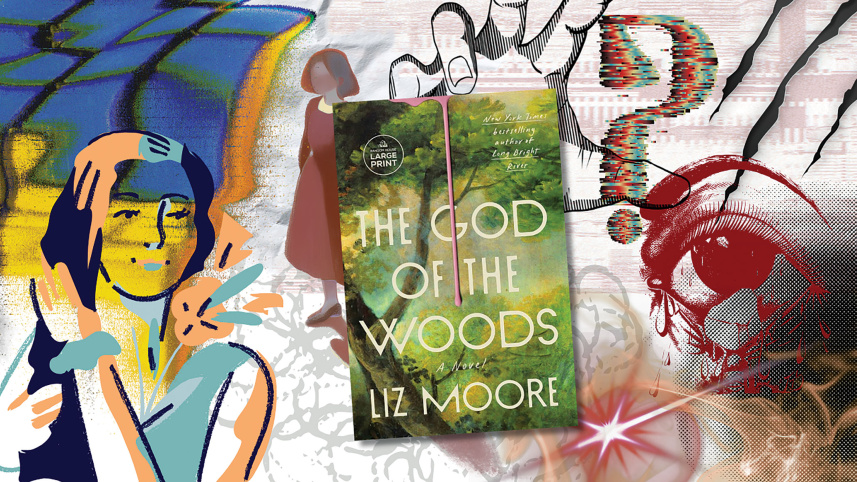
The God of the Woods caught my attention while I was excavating for my next read on Goodreads. It is the latest novel by Liz Moore. The mystery genre is my guilty pleasure; the fact that this novel won the Goodreads Choice Award for Readers’ Favourite Mystery & Thriller in 2024 made me pick it up. The book, The God of the Woods, is about the coincidental disappearances of Bear and Barbara. Both are separate incidents as Bear goes missing in the 1960s, and Barbara goes missing in 1975. They are the children of the Van Laar family—an affluent and influential family situated in the Adirondack Mountains, New York, United States. Their source of fortune comes from banking. Money is their only notable power; it brings them comfort but never peace. Rather than making them formidable, it renders them as dependent as the people who rely on the Van Laar for employment. However, deluded by their financial power, the Van Laar family never comprehends this dependency. Moreover, they are obsessed with maintaining a pristine reputation to safeguard their business alliances. All decisions revolve around protecting this reputation, such as the marriage between Peter Van Laar III and Alice, or the events that erupt after the disappearances of their children.
The mother of Bear and Barbara is Alice, who stays in a wonderland. She faces many betrayals and misfortunes and is a true definition of fragile in every sense. Alice gets mentally abused by her ruthless husband. However, you feel neither sympathy nor pity for her. It’s because she is more of a nuisance, considered a burden, even to herself. She is never cruel; at the same time, she is never kind either. She is emotionally reckless and irresponsible, but never naïve. She can be as demanding as her husband to people whom Alice considers socially lower than her, but fails to be as assertive as he is. She is not childish, but her thoughts are more like a teenager’s than like an adult’s. Sometimes, I feel she is as arrogant and as narcissistic as her in-laws and as hypocritical as her parents and sister, in a more palatable form. For Alice, love comes easily for her first child, Bear, who is perhaps the only person she has ever truly loved in her entire life. Unfortunately, Alice does not feel the same affection for her second child, Barbara.

Peter and Alice were happy with Bear because he was a son who would eventually inherit the Van Laar legacy and protect it. After his disappearance, the second child, Barbara, is supposed to be his replacement. But Barbara is rebellious and has a bold and daring sense of style. Everything about her is loud and eye-catching. Her rebellious nature and eccentric choice are a cry for attention from her family; a fight against the negligence she has faced since childhood. Alice is physically weak and appears fragile and malnourished, yet in her mind, this is the ideal body. As a result, she occasionally forbids Barbara from eating and instructs the cooks not to give her any food. Barbara is 12 years-old, and her body is naturally undergoing changes. Alice believes that Barbara eats too frequently and should restrain herself. Alice disregards the fact that Barbara is physically healthy, actively exercises, and is never fat. Alice finds it difficult to look at the physical changes that Barbara is going through, and Alice wants to carve those changes by restricting Barbara’s food intake. Thus, starved, Barbara would occasionally tiptoe to the kitchen to eat. The cook would leave quietly, giving her privacy and hiding her activity from her emotionally distant parents.
Alice believes that Barbara eats too frequently and should restrain herself. Alice disregards the fact that Barbara is physically healthy, actively exercises, and is never fat. Alice finds it difficult to look at the physical changes that Barbara is going through, and Alice wants to carve those changes by restricting Barbara’s food intake.
Now, let’s start with the shortcomings, which are foremost about the chronology. The timeline oscillates excessively, almost abruptly, jumping from 1950 to 1975 with no chronological order. As a result, it is hard to keep the story in line. You feel jostled every few pages. Secondly, Moore swiftly changes points of view among a plethora of characters. And, this book carries many characters. Moreover, the frequent shifts in the timeline and points of view do little to aid the plot. Although this makes the plot and motive clear, it gives you a hefty background. However, it also made the story appear incoherent. Lastly, Moore overused cliffhangers. It was redundant and clichéd. Nonetheless, if you can push through these interruptions, then the book will be totally worth your time. The writing is smooth, and the cliff-hangers do keep one engaged till the end.
Tahmina Hossain is first and foremost a reader, a lover of literature, and then a writer. If you enjoy rambling about literature like her, then reach out at: literary.ramblings.by.t@gmail.com.
 For all latest news, follow The Daily Star's Google News channel.
Comments