
Japan fans uphold tradition as they clean up stadium after Netherlands match
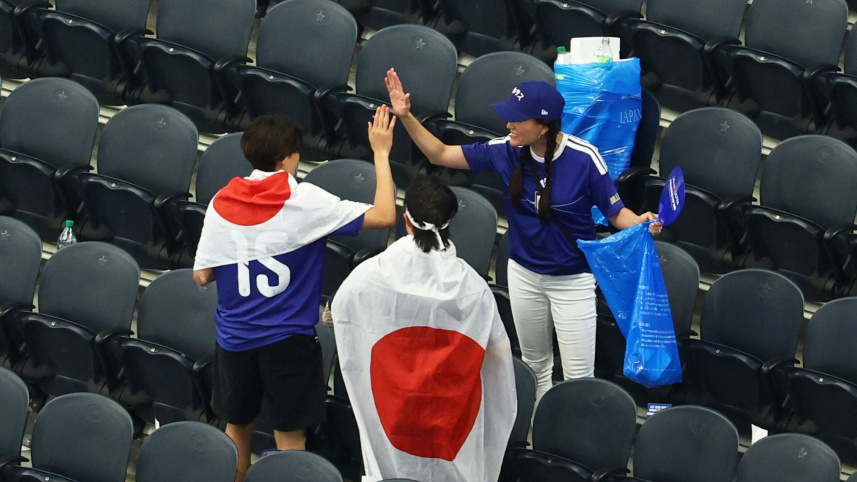
Fans of Japan’s national football team once again drew global attention for their trademark humility and discipline after their side’s dramatic 2-2 draw against the Netherlands in Arlington, Texas, on Sunday.
At the AT&T Stadium, where the Group F clash unfolded in front of a packed crowd, emotions ran high as Japan twice found themselves behind against the higher-ranked Dutch side. Yet the post-match scene was defined not by celebration alone, but by a quieter, more unusual ritual: supporters picking up litter across the stands.
 For all latest news, follow The Daily Star's Google News channel.
 As has become widely associated with Japanese football culture, fans collected trash in large plastic bags, carefully restoring their seating areas long after the final whistle. The act stood in stark contrast to the typical post-match scenes of chaos or leftover debris often seen in major tournaments.
On the pitch, Japan showed resilience. Midfielder Daichi Kamada produced a crucial equaliser, reacting sharply to a Koki Ogawa header that deflected into his path, ensuring his team salvaged a valuable point. The result meant the two highest-ranked sides in Group F ultimately shared the spoils, though Japan’s comeback twice from behind gave the draw the feel of a victory.
This behaviour among supporters is not new. Japanese fans gained international recognition during the 2018 World Cup in Russia when they cleaned stadium sections even after a defeat. Four years later in Qatar, the trend continued as supporters tidied venues following Japan’s group-stage wins over football giants Germany and Spain—an achievement that saw them top Group E.
Former Japan coach Hajime Moriyasu has previously described this cultural practice as second nature, noting that leaving public spaces cleaner than they were found is a deeply rooted social norm rather than a performance for cameras.
Adding a surprising layer to Sunday’s scene was NFL quarterback Jameis Winston, who was present in a media role for FOX. Winston engaged with fans from both sides, participating in pre-match chants outside the stadium and later observing the Japanese supporters’ cleanup effort.
While football on the pitch delivered intensity and drama, it was the conduct in the stands that once again defined Japan’s global football identity--discipline, respect, and a collective sense of responsibility that continues to resonate far beyond the final scoreline.




Comments